

Fruit vegetable Processing Line
Products


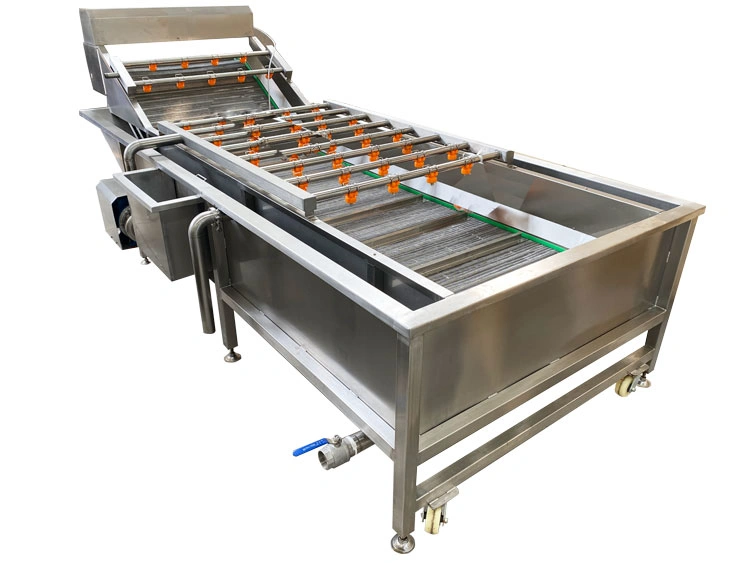
Matton designs and manufactures complete fruit and vegetable processing lines engineered for stable output, food safety compliance, and long-term operational efficiency. Our systems cover the entire production flow—from raw material receiving and pre-treatment to thermal processing, freezing, drying or packaging—allowing processors to scale capacity while maintaining consistent quality.
Unlike standardized equipment suppliers, Matton approaches each processing line as a process system, not a collection of machines. Line configuration, material flow, energy balance and hygiene design are optimized together, ensuring predictable yields, lower operating cost and reliable compliance with international food safety standards.
Our fruit and vegetable processing lines are widely used in frozen food factories, freeze-drying plants, canning operations, dehydrated food facilities and central kitchens.
Process Scope & Line Architecture
A typical fruit & vegetable processing line consists of modular units connected through a hygienic and automation-ready layout. Depending on product type and final application, the line can be configured for IQF freezing, blanching, pasteurization, freeze drying or retort sterilization.
Typical Process Flow
| Stage | Function | Key Equipment |
|---|---|---|
| Raw material reception | Controlled intake & inspection | Receiving conveyors, inspection tables |
| Washing & cleaning | Remove soil, debris, pesticides | Bubble washer, drum washer, crate washing machine |
| Sorting & grading | Size & quality separation | Roller graders, optical/manual sorting |
| Cutting & preparation | Product shaping | Dicers, slicers, peelers |
| Blanching / pretreatment | Enzyme inactivation | Blanching machine, steam or water systems |
| Cooling & dewatering | Stabilize structure | Cooling conveyor, vibration dewatering |
| Further processing | Product-specific | IQF freezer, freeze dryer, retort |
| Packaging | Final product handling | Weighing, packing, sealing systems |
This modular structure allows processors to expand or modify the line without redesigning the entire system.
Key Design Principles
1. Product-Driven Engineering
Different fruits and vegetables behave very differently during washing, heating and cooling. Leafy greens, root vegetables, berries and tropical fruits require different handling intensity and thermal exposure. Matton designs each line based on:
-
Tissue sensitivity
-
Sugar and moisture content
-
Enzyme activity profile
-
Target shelf life and appearance
This minimizes yield loss and preserves color, texture and nutritional value.
2. Hygienic & Food-Grade Construction
All product contact parts are manufactured from food-grade stainless steel with smooth welds, rounded corners and fully drainable structures. Design principles follow HACCP and GMP guidelines:
-
No dead zones for microbial growth
-
Easy access for cleaning and inspection
-
Optional CIP integration
3. Automation & Process Stability
Stable output depends on stable process control. Matton integrates PLC-based automation across the entire line:
-
Centralized recipe control
-
Temperature, flow and time synchronization
-
Alarm and deviation logging
-
Batch traceability
This reduces operator dependency and improves consistency between shifts.
Core Equipment Modules Explained
Washing & Cleaning Systems
Effective washing is critical for food safety and downstream process stability. Matton offers multi-stage washing systems combining:
-
Bubble washing for gentle agitation
-
High-pressure spray zones for stubborn contamination
-
Water filtration and recirculation
This approach balances cleaning efficiency with water consumption control.
Blanching & Pretreatment
Blanching is often the most technically sensitive stage. Improper blanching leads to color loss, texture degradation or reduced shelf life.
Matton blanching systems provide:
-
Uniform temperature distribution
-
Adjustable residence time
-
Steam or water-based configurations
Pretreatment parameters are tuned based on enzyme activity rather than fixed time assumptions.
Cooling & Dewatering
Rapid cooling after blanching stabilizes product structure and prevents overprocessing. Our cooling conveyors and vibration dewatering systems remove excess surface water, improving freezing or drying efficiency downstream.
Integration with IQF, Freeze Drying or Retort
Fruit and vegetable processing lines are commonly integrated with:
-
IQF quick freezers for frozen vegetables and fruits
-
Freeze dryers for premium dehydrated products
-
Retort systems for shelf-stable packaged foods
Matton ensures seamless mechanical and control integration between these systems.
Capacity & Scalability
Matton processing lines are designed for industrial scalability.
| Line Capacity | Typical Application |
|---|---|
| 500–1,000 kg/h | Pilot plants, R&D centers |
| 1–3 tons/h | Regional processing facilities |
| 3–10+ tons/h | Large industrial export plants |
Modular expansion allows processors to add stages or increase throughput without disrupting existing operations.
Energy & Resource Optimization
Energy and water consumption significantly affect lifecycle cost. Matton applies process-level optimization rather than single-machine efficiency claims.
Key strategies include:
-
Heat recovery from blanching water
-
Optimized pump sizing and variable-frequency drives
-
Water reuse and filtration loops
-
Reduced product rework through process stability
These measures lower total cost per kilogram processed, not just nominal power ratings.
Quality Control & Compliance
Matton processing lines are built to support international food regulations and customer audits.
Supported standards include:
-
HACCP
-
GMP
-
FDA process validation support
-
EU food hygiene requirements
Each line is delivered with:
-
Equipment documentation
-
Electrical and mechanical drawings
-
FAT reports and test records
-
Optional third-party inspection coordination
Representative Technical Parameters
| Parameter | Typical Range |
|---|---|
| Raw material type | Leafy vegetables, root crops, fruits |
| Processing temperature | Ambient to 100°C (blanching) |
| Line material | SUS304 / SUS316 |
| Control system | PLC + touchscreen HMI |
| Cleaning method | Manual / CIP optional |
| Integration | IQF, freeze dryer, retort compatible |
Procurement Considerations
For purchasing teams, a fruit & vegetable processing line should be evaluated on system performance, not unit price.
Key procurement questions:
-
Can the supplier demonstrate process validation?
-
Is spare parts supply standardized and long-term?
-
Are expansion and modification options available?
-
Does the design reduce labor dependency?
Matton supports procurement with:
-
Clear equipment lists
-
Energy and water consumption estimates
-
Lifecycle cost analysis
-
FAT and SAT planning
Installation, Training & After-Sales Support
Matton provides full lifecycle support:
-
On-site installation and commissioning
-
Operator and maintenance training
-
Spare parts packages
-
Remote technical support
Service programs are structured to minimize downtime and protect long-term asset value.
Common Applications
-
Frozen vegetables (peas, corn, carrots)
-
IQF fruits (berries, mango, pineapple)
-
Freeze-dried fruits and vegetables
-
Blanched vegetables for further processing
-
Prepared ingredients for ready meals
FAQs — Fruit & Vegetable Processing Line
Q1: How do I choose the right processing line for different vegetables?
A1: Selection depends on tissue sensitivity, moisture content and final product form. Matton evaluates product characteristics and recommends washing intensity, blanching method and downstream processing accordingly.
Q2: Can one line process multiple products?
A2: Yes. Modular design and adjustable parameters allow one line to handle multiple fruits or vegetables, provided capacity and cleaning requirements are considered during design.
Q3: What level of automation is recommended?
A3: For industrial plants, PLC-based centralized control is recommended to reduce operator dependency, improve consistency and simplify traceability.
Q4: How is food safety ensured during processing?
A4: Through hygienic equipment design, controlled process parameters, validated blanching cycles and documented cleaning procedures.
Q5: Does Matton support factory acceptance testing (FAT)?
A5: Yes. FAT can be conducted at our Zhucheng facility, including functional tests, capacity verification and control logic review, with third-party witness options available.