

Crate Washing Machine
Products
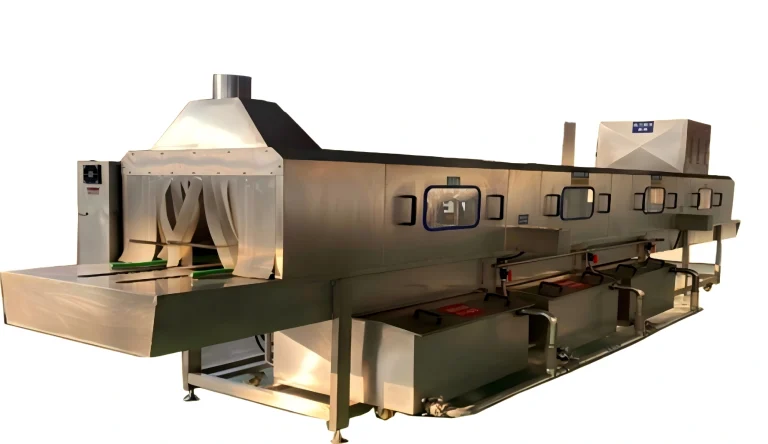

In modern food processing and logistics facilities, reusable crates are critical assets—but they are also potential contamination vectors if not cleaned and sanitized correctly. Matton designs and manufactures industrial crate washing machines that deliver repeatable hygiene performance, controlled water and energy consumption, and long-term mechanical reliability. Our systems are widely applied in meat processing plants, fruit and vegetable processing lines, dairy factories, beverage logistics centers, and cold chain distribution hubs.
Why Industrial Crate Washing Matters
Reusable plastic crates (RPCs), bins, and totes are exposed to:
-
Organic residues (fat, protein, sugars)
-
Soil, plant debris, and packaging fragments
-
Microbial contamination from raw materials and transport
-
Moisture retention that encourages bacterial growth
Manual washing or under-specified machines often fail to remove residues from corners, ribs, and stacking interfaces. In contrast, automated crate washing machines provide:
-
Consistent hygiene levels
-
Reduced labor dependency
-
Lower water and chemical consumption per crate
-
Documentable sanitation performance
For procurement teams, the focus is no longer only purchase price—it is total cost of ownership, sanitation risk reduction, and compliance reliability.
Matton Crate Washing Machine Design Philosophy
Matton crate washers are designed from the ground up for industrial duty cycles, not intermittent use. Our engineering priorities include:
-
Uniform spray coverage across all crate surfaces
-
Stable temperature control throughout the washing and rinsing zones
-
Modular sections for future capacity expansion
-
Easy access for maintenance and inspection
-
Long service life in wet, chemically aggressive environments
Each system is manufactured in Zhucheng, Shandong, with full factory acceptance testing (FAT) prior to shipment.
Typical Crate Washing Process Flow
A Matton crate washing machine follows a structured multi-stage process:
-
Pre-wash / Debris Removal
High-flow water removes loose contaminants and prevents carryover into detergent zones. -
Main Wash (Detergent Zone)
Heated water combined with controlled detergent dosing breaks down fats, proteins, and biofilms. -
Intermediate Rinse
Removes residual chemicals and loosened contaminants. -
Sanitizing Rinse (Optional)
Hot water or chemical sanitization to meet hygiene targets. -
Final Rinse (Fresh Water)
Ensures crates exit residue-free and ready for reuse. -
Air Knife Drying (Optional)
High-velocity air removes surface water to prevent recontamination during storage.
Key Engineering Features
High-Impact Spray System
-
Optimized nozzle angles for ribbed crate geometry
-
Stainless steel spray arms designed for uniform pressure distribution
-
Tool-free nozzle removal for inspection and cleaning
Thermal Stability
-
Insulated wash tanks to minimize heat loss
-
Accurate temperature sensors for detergent efficacy
-
Stable operation even under fluctuating line speeds
Intelligent Water Management
-
Multi-stage filtration systems
-
Reuse of wash water where hygienically appropriate
-
Reduced freshwater intake per crate
PLC Control & Automation
-
Recipe-based operation for different crate types
-
Automatic temperature, pressure, and detergent control
-
Alarm and fault logging for maintenance planning
Crate Types & Compatibility
Matton crate washing machines are compatible with a wide range of container designs:
| Crate Type | Typical Industries |
|---|---|
| Plastic food crates | Meat, poultry, seafood |
| Vegetable harvesting crates | Fruit & vegetable processing |
| Beverage transport crates | Bottling plants |
| Bakery trays | Bread & pastry production |
| Industrial totes | Logistics & cold storage |
Custom guides and conveyor interfaces can be engineered for mixed crate sizes within the same production line.
Performance Parameters (Typical Ranges)
| Parameter | Typical Range |
|---|---|
| Capacity | 200 – 2,000 crates/hour |
| Wash temperature | 45°C – 85°C |
| Rinse temperature | Ambient – 90°C |
| Water consumption | Optimized per crate (config-dependent) |
| Detergent control | Automatic dosing |
| Construction material | SUS304 / SUS316L |
| Control system | Siemens / equivalent PLC |
Hygiene, Compliance & Food Safety
Matton crate washing machines are designed in line with HACCP principles and support compliance with:
-
GMP hygiene requirements
-
Food contact sanitation standards
-
Internal QA validation protocols
Key hygienic design elements include:
-
Fully drainable tanks
-
Sloped surfaces to prevent standing water
-
Minimal crevices and hygienic welds
-
CIP-friendly internal geometry
For audit-driven environments, data logging and cycle traceability can be integrated into plant quality systems.
Integration with Food Processing Lines
Crate washers are rarely standalone machines. Matton systems integrate seamlessly with:
-
Slaughtering and cutting lines
-
Fruit & vegetable processing lines
-
IQF quick freezing operations
-
Packing, palletizing, and crate storage systems
Integration benefits include reduced manual handling, improved line balance, and predictable sanitation workflows.
Maintenance & Lifecycle Cost Considerations
A crate washing machine must operate reliably under wet, hot, and chemically active conditions. Matton designs for long-term serviceability:
-
Front and side access panels
-
Easily replaceable pumps and seals
-
Standardized components for spare part availability
-
Preventive maintenance schedules aligned with production cycles
From a procurement perspective, lower downtime and predictable maintenance costs often outweigh initial capital savings from under-engineered machines.
Customization Options
Matton offers project-specific customization including:
-
Extended drying sections
-
Chemical sanitation modules
-
Energy recovery systems
-
Variable speed conveyors
-
Stainless steel grade upgrades for aggressive detergents
This ensures the crate washing machine matches actual production requirements, not generic assumptions.
Factory Testing & Quality Assurance
Before shipment, every Matton crate washer undergoes:
-
Mechanical inspection
-
Functional testing of pumps and conveyors
-
Control system verification
-
Water circulation and spray coverage checks
FAT documentation can be supplied for customer records or third-party inspections.
Comparative Overview: Manual vs Automated Crate Washing
| Aspect | Manual Cleaning | Matton Crate Washing Machine |
|---|---|---|
| Cleaning consistency | Variable | Highly repeatable |
| Labor requirement | High | Low |
| Water usage | Uncontrolled | Optimized |
| Hygiene validation | Difficult | Documentable |
| Long-term cost | High | Predictable |
Frequently Asked Questions (FAQs)
1. How do I determine the correct capacity for a crate washing machine?
Capacity should match peak crate return volume, not average output. Matton evaluates line speed, crate circulation loops, and sanitation windows to size the machine correctly.
2. Can one machine handle different crate sizes?
Yes. With adjustable guides and programmable recipes, a single machine can process multiple crate formats, provided size differences fall within the design range.
3. How is water consumption controlled?
Through multi-stage filtration, controlled overflow, and reuse of wash water where hygienically acceptable. Fresh water is typically reserved for final rinse stages.
4. What detergents can be used?
Most food-grade alkaline and neutral detergents are compatible. Matton designs systems to work with customer-preferred chemical suppliers and dosing strategies.
5. What is the expected service life of a crate washing machine?
With proper maintenance, industrial crate washing machines typically operate 10–15 years or longer, especially when constructed from high-grade stainless steel and serviced preventively.