

Water Spray Retort
Products
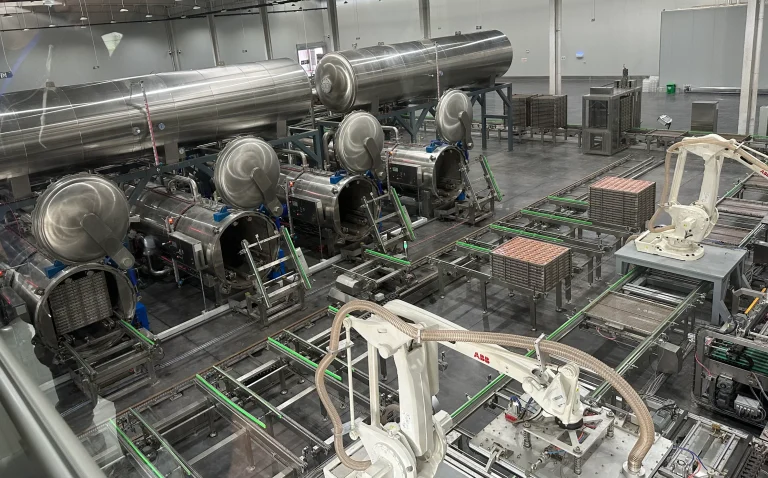

Matton water spray retorts are engineered for uniform, efficient thermal processing of canned and pouch foods where product quality and throughput are critical. Using controlled high-velocity water circulation and precise pressure/temperature management, our water spray retorts deliver consistent heat transfer, short process times and excellent product protection for meat, seafood, ready meals, pet food and shelf-stable liquid products. Designed for OEM flexibility, PLC automation and FAT-verified performance, Matton retorts meet procurement and engineering requirements for modern food production.
How a Water Spray Retort Works
A water spray retort uses recirculated, pressurized water sprayed across product baskets or racks to transfer heat uniformly throughout the load. Key process steps include:
-
Loading: product baskets or trolleys are loaded into the retort chamber (batch or continuous systems).
-
Heating / Pressurization: steam or another heating medium raises water temperature while system pressure is controlled to prevent container deformation.
-
Circulation / Spray: high-velocity nozzles produce a turbulent spray pattern to ensure uniform temperature distribution and minimize cold spots.
-
Holding / Sterilization: the process holds the product at a defined F0 value or time/temperature profile to achieve microbial inactivation.
-
Cooling / Depressurization: controlled cooling or steam condensation steps to safely reduce product temperature and pressure before unloading.
This method provides faster come-up times and more uniform heating compared with static water-bath or steam-only retorts, reducing overprocessing and preserving texture, color and nutritional quality.
Key Benefits for Engineers & Procurement
-
Uniform heat distribution: spray circulation minimizes thermal gradients and reduces cold spots, improving sterilization consistency.
-
Shorter process times: faster heat transfer shortens cycle times, improving throughput and lowering energy per batch.
-
Product protection: controlled pressure profiles reduce container deformation and maintain appearance for cans and pouches.
-
Scalable configurations: batch, semi-continuous and fully automatic continuous retorts support capacities from pilot runs to large plants.
-
FAT-ready documentation: engineered FAT protocols, thermal maps and traceable test records to support procurement validation.
Technical Features & Engineering Highlights
-
Hydrodynamic nozzle arrays engineered for uniform flow and minimal dead zones.
-
Robust recirculation pumps sized for required flow rates and redundancy options for critical lines.
-
PLC-based control system with recipe management, PID control loops, alarm handling and batch traceability.
-
Stainless-steel hygienic construction (AISI 316L/304 for product-contact surfaces) with sanitary welds and drainable geometry.
-
Pressure & safety systems including overpressure relief, safety interlocks and pressure vessel documentation (as applicable).
-
Energy-efficient heating options: steam-heated jacket, indirect boilers or electric heater integration depending on site utilities.
Typical Applications
-
Canned vegetables, fruits and ready meals.
-
Aseptic or retort pouch foods (soups, sauces, pet food).
-
Seafood and meat products requiring gentle thermal profiles.
-
High-acid and low-acid product sterilization where uniformity and product quality are prioritized.
Control, Automation & Traceability
Matton retorts include a scalable PLC/HMI control architecture tailored to plant requirements:
-
Recipe storage for standardized thermal cycles (F0, process times, pressurization ramps).
-
Data logging of temperature, pressure, flow and cycle events for regulatory compliance and QA.
-
Remote access & diagnostics for authorized service personnel (VPN-enabled, secure).
-
Batch traceability with batch IDs, operator login and exportable CSV/SQL reports for integration into MES/ERP systems.
Example Technical Specifications (typical ranges)
| Parameter | Range / Option |
|---|---|
| Chamber Diameter / Length | Custom, from small pilot sizes to multi-meter industrial chambers |
| Spray Flow Rate | 2 – 50 m³/hr (per pump), depending on chamber size |
| Working Pressure | Up to 3.0 bar gauge typical; higher ratings available on request |
| Temperature Range | Ambient to 140°C (steam-heated systems) |
| Heating Source | Steam, indirect electric, thermal oil (optional) |
| Control Platform | Siemens / Allen-Bradley / Delta PLC; touchscreen HMI |
| Construction Materials | 304/316L stainless steel for product contact; carbon steel outer shell optional |
| Loading Options | Basket/trolley (batch), continuous trolley or conveyor infeed |
Factory Acceptance Testing (FAT) & Validation
Matton provides comprehensive FAT packages to support procurement and regulatory review:
-
FAT protocol including thermal mapping, come-up time verification, pressure leak testing, nozzle flow validation and control logic tests.
-
Thermal mapping reports showing temperature distribution across load positions and meeting specified F-values.
-
Video/photo documentation of FAT runs and assembly.
-
Third-party witness options for buyer-appointed inspectors or certification bodies.
-
As-built documentation including P&ID, electrical schematics, welding records and material certificates.
Installation, Commissioning & Site Acceptance
Matton offers full project delivery:
-
Pre-installation survey to confirm utilities, foundation and logistics.
-
Mechanical & electrical installation of chamber, pumps, piping and control cabinets.
-
Refrigeration / steam interface hookup and safety system checks.
-
Commissioning & SAT (Site Acceptance Test) with process validation runs and operator training.
-
Handover package including SOPs, maintenance plans and spare parts recommendations.
Maintenance & Spare Parts
Planned maintenance and genuine spare parts reduce downtime and extend life:
-
Recommended spares: nozzle sets, pump seals, pressure sensors, safety valves, temperature probes and control modules.
-
Preventive maintenance schedules: pump service, nozzle inspection/cleaning, pressure vessel checks and electrical cabinet inspections.
-
Field service support: remote diagnostics, on-site troubleshooting and component replacement by Matton-trained engineers.
-
Service contracts and SLAs available for guaranteed response times and stocked parts kits.
Customization & Integration Options
Matton’s engineering team customizes retorts to specific product, line and regulatory needs:
-
Basket and rack designs to optimize load orientation and maximize throughput.
-
Automated loading/unloading systems for continuous operation and higher OEE.
-
Integration with upstream/downstream equipment such as filling lines, conveyors, depalletizers and packaging systems.
-
Special materials and coatings for aggressive product chemistries or extended durability.
-
Advanced control packages for multi-stage sterilization, vacuum-assisted cooling or combined steam-air cycles.
Regulatory Compliance & Documentation
We support global exports and local regulatory requirements:
-
Pressure vessel documentation (where applicable) and certification support.
-
CE-related electrical documentation and machine safety dossiers.
-
HACCP/GMP design notes and CIP-compatible features for food safety programs.
-
Material traceability and weld records for customer QA and audits.
Downloadable Resources & Support
Matton provides datasheets, FAT templates, sample thermal mapping reports and installation checklists to qualified buyers. Contact our sales team to request technical documents or to arrange a factory visit and witness inspection in Zhucheng.
Frequently Asked Questions (FAQs)
Q1: What is the difference between a water spray retort and a water-bath retort?
A1: A water spray retort circulates pressurized water through spray nozzles to actively force turbulent flow over containers, producing faster and more uniform heating. A water-bath retort relies on static or gently circulated water and typically has slower come-up times and less uniformity.
Q2: Can water spray retorts process both cans and pouches?
A2: Yes. Matton retorts are configurable with basket and rack systems to handle cans, jars and retort pouches. Pressure control profiles are tuned to minimize deformation of flexible packages.
Q3: What utilities are required for a Matton water spray retort?
A3: Typical utilities include steam (or alternative heat source), process water, compressed air for actuators, electrical power for pumps and controls, and adequate drainage. Exact requirements are provided in the project-specific utility list.
Q4: How is thermal uniformity validated?
A4: During FAT and validation runs we install calibrated thermocouples at representative load positions and generate thermal maps. FAT reports document come-up times, cold spot temperatures and calculated F-values for regulatory acceptance.
Q5: Do you offer CIP or hygienic design options?
A5: Yes. Retort internal geometry, nozzle materials and access ports are designed for cleanability, and CIP-compatible options (drainable nozzles, inspection ports) are available to meet hygienic requirements.