

Pilot Freeze Dryers
Products
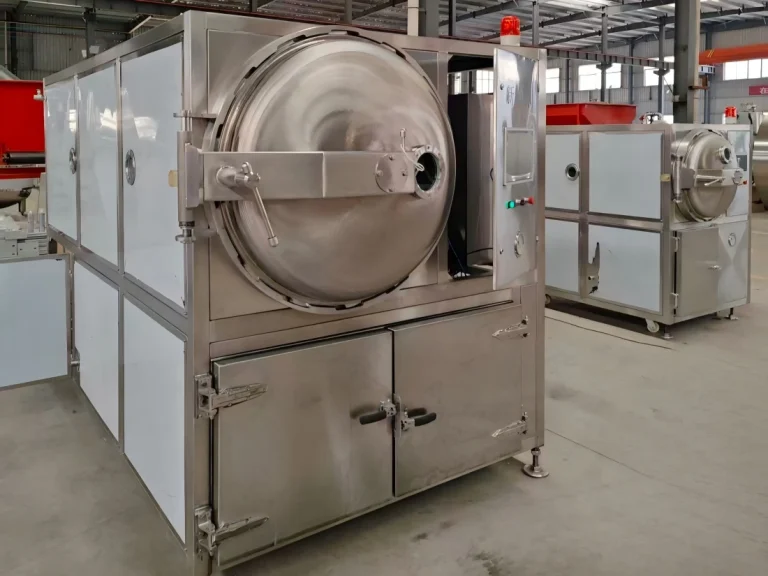

Pilot freeze dryers (also called lab-scale lyophilizers or pilot lyophilizers) are the bridge between laboratory R&D and full-scale production. Matton’s pilot freeze dryers are engineered for repeatable cycle development, reliable process R&D, and small-batch production runs. Designed for food technologists, formulation scientists, process engineers and procurement teams, our pilot units provide precise shelf temperature control, robust vacuum systems, and flexible condenser capacity to support primary drying, secondary drying and recipe optimization prior to scale-up.
This page is focused on what technical teams and procurement officers need to evaluate when specifying, purchasing and validating a pilot freeze dryer: performance metrics, engineering design, refrigeration options (ammonia vs CO₂), utilities, FAT/SAT scope, cycle development services, sampling & analytics (e.g., Karl Fischer moisture), spare parts, lead times and cost drivers.
Why use a Pilot Freeze Dryer?
-
Controlled process development: Pilot lyophilizers allow scientists to develop optimized freeze-drying recipes (freezing profile, primary drying, secondary drying) with precise control over shelf temperature and chamber vacuum.
-
De-risk scale-up: Pilot runs identify thermal gradients, collapse temperatures and critical drying endpoints, which reduces the risk when moving to commercial freeze dryers.
-
Small-batch production: Useful for clinical batches, high-value products, niche foods, or contract manufacturing short runs.
-
Regulatory & validation: Pilot units provide data for validation packages (thermal maps, residual moisture, cycle repeatability) required by QA and regulatory teams.
Primary keywords used on this page: Pilot Freeze Dryers, pilot lyophilizers, lab-scale lyophilizers, freeze drying recipes, cycle development, vacuum system, condenser capacity.
Core Components & Functional Blocks
A well-engineered pilot freeze dryer includes the following subsystems:
-
Drying chamber & shelves: stainless-steel chamber with multiple heated/cooled shelves. Shelves provide uniform conduction heat to product trays.
-
Shelf temperature control: independent shelf circuits with PID control allow precise ramping and holding during primary and secondary drying.
-
Vacuum system: dual-stage rotary vane or screw vacuum pumps with isolation valves and vacuum gauges; roughing and backing arrangements to protect pumps.
-
Condenser: cold trap that captures sublimated vapor; available in sizes and cooling technologies (mechanical vapor compression with ammonia or CO₂ refrigeration, or cascade refrigeration).
-
Refrigeration system: options include ammonia (NH₃) or CO₂ (R-744) based systems for pilot equipment, or integrated cascade systems for lower temperature requirements.
-
Control & data acquisition: PLC or industrial controller with recipe management, thermocouple logging, vacuum/data export for validation and process optimization.
-
Loading & containment: tray systems, manifolded vials (for pharmaceutical applications), Sterile/aseptic options where needed.
Typical Technical Features & Options
Below are features procurement and engineering teams commonly compare.
| Feature | Typical Pilot Unit Capability | Why it matters for R&D & procurement |
|---|---|---|
| Shelf area | 0.5 – 6 m² | Determines batch size and representative scale for product trials |
| Shelf temperature range | -60°C to +80°C | Required to freeze product and control active drying & secondary drying |
| Shelf heating/cooling rate | 0.1 – 5°C/min | Faster/slower ramps simulate production conditions |
| Condenser capacity | 10 – 300 kg ice capacity | Influences run time and interval between defrosts/maintenance |
| Ultimate vacuum | <10⁻¹ mbar (typical) | Affects sublimation rate and product quality |
| Vacuum pumps | Rotary vane / dry screw options | Oil-sealed vs dry affects contamination risk & maintenance |
| Refrigeration | Mechanical (ammonia/CO₂) or cascade | Choice affects efficiency, GWP, and local safety/regulatory needs |
| Control system | PLC with recipe & data logging | Essential for repeatable cycles, CFR 11 compliance if needed |
Example Pilot Freeze Dryer Configurations
| Model | Shelf Area (m²) | Condenser Capacity (kg) | Typical Use |
|---|---|---|---|
| PD-0.5 | 0.5 | 10 | Small R&D batches, formulation screening |
| PD-1.5 | 1.5 | 30 | Pilot-scale R&D, pilot production for niche products |
| PD-3.0 | 3.0 | 80 | Extended pilot trials and clinical batch runs |
| PD-6.0 | 6.0 | 150 | High-throughput pilot work and tech-transfer runs |
Performance Metrics Engineers Should Specify
When requesting quotations or evaluating pilot freeze dryers, include the following performance metrics:
-
Shelf uniformity (°C): specification for deviation across shelf surface under load.
-
Temperature control stability: typical PID stability ±0.1–0.5°C depending on model.
-
Ultimate vacuum level: targeted vacuum and pump type.
-
Condenser pull-down & capacity: time to reach target condenser temperature and ice accumulation rate.
-
Ramp rates: achievable shelf heating/cooling ramp rates under nominal load.
-
Cycle reproducibility: how well the unit repeats performance across runs (statistical CV).
-
Data logging frequency & resolution: thermocouple logging interval, vacuum & refrigeration telemetry.
Refrigeration Options & Considerations
Pilot freeze dryers can use varied refrigeration architectures. Your selection affects performance, compliance, and lifetime costs.
-
Mechanical vapor compression (HFC/HFO) for pilot units: common for small lab units but increasing regulatory and sustainability concerns over refrigerant GWP.
-
CO₂ (R-744) refrigeration: low GWP, excellent for low-temperature condensers; typically more expensive initially but attractive for sustainability-minded operations.
-
Ammonia (NH₃) systems: highly efficient at scale; rarely used in very small lab units due to safety/regulatory issues but applicable for pilot units located in industrial settings where ammonia is already present.
-
Cascade refrigeration: combines a low-temp refrigerant with a higher-temp stage (e.g., CO₂ + HFO) to achieve very low condenser temperatures for demanding products.
Procurement should evaluate utilities, local regulations (e.g., ammonia handling, refrigerant licensing), and energy cost models when selecting refrigeration.
Cycle Development & FD Recipe Services
Matton offers cycle development services tailored to pilot freeze dryers. R&D scope typically includes:
-
Product characterization: moisture content, freezing point/ice fraction, glass transition (Tg’), collapse temperature (Tc), and particle/solid morphology.
-
Freezing study: controlled freeze rates (annealing if needed) to optimize ice crystal size and pore structure for drying kinetics.
-
Primary drying development: identification of shelf temperature, chamber pressure, and endpoint (residual moisture or product temperature) to avoid collapse while minimizing time.
-
Secondary drying: selection of final shelf temperature and duration to reach target residual moisture; reduction of bound water.
-
Analytical support: Karl Fischer titration for residual moisture, texture reconstitution tests, DSC for thermal properties, SEM for microstructure where applicable.
-
Scale-up guidance: pilot-to-production translation with recommended safety margins, condenser sizing, and thermal mapping comparisons.
Deliverables: validated cycle recipes, thermal maps, residual moisture data, SOPs and a scale-up report with recommended production freeze dryer parameters.
Validation, FAT & SAT — What Procurement Must Require
For regulated and quality-driven projects, insist on clear FAT and SAT scopes and deliverables. Typical documentation and testing include:
-
Factory Acceptance Test (FAT): pump-down tests, shelf uniformity under representative loads, condenser pull-down & ice capacity test, full cycle execution with thermocouple mapping, data logs and video evidence.
-
Site Acceptance Test (SAT): repeat of key tests on-site after installation focusing on utilities integration and real-sample runs.
-
Calibration & certificates: thermocouple calibration certificates, vacuum gauge calibration, refrigeration pressure transducer certs.
-
Material & weld certificates: 304/316 stainless steel certificates, weld procedure qualifications, NDT where required.
-
Validation package: cycle reports, repeatability statistics, residual moisture analysis (Karl Fischer), and a traceable raw data archive for QA review.
Procurement teams should require FAT witness opportunities, third-party inspection options and a clear acceptance checklist.
Utilities & Facility Requirements (Typical)
Provide these baseline utility details in RFQs:
| Utility | Typical Requirement (pilot unit) |
|---|---|
| Electrical | 220–480 VAC, single/three-phase depending on model; specify available power |
| Cooling water | Chilled water or condenser water for some refrigeration options; flow & temperature specified |
| Steam | Not typically required for pilot freeze dryers but may be needed for ancillary processes |
| Compressed air | 6–8 bar for pneumatic valves and actuators |
| Drainage | Floor drain capacity for defrost and condensate |
| Ventilation | Local ventilation if ammonia refrigeration is installed |
Matton provides full utility load sheets during quotation and detailed utility checklists before FAT.
Recommended Spare Parts & Maintenance Program
Planned maintenance reduces downtime and avoids catastrophic failures during critical runs.
Recommended spare parts kit for pilot units:
-
Spare thermocouples (type K/T) — 10% of installed quantity
-
Vacuum pump oil and oil filters (if applicable) or OEM dry pump maintenance kits
-
Vacuum pump seals and gaskets
-
Condenser service valves and sight glasses
-
Shelf heater cartridge spares and sensor spares
-
Control I/O modules (one spare card) and main fuses
-
Door gasket set
Maintenance schedule (example):
-
Daily: chamber cleanliness, vacuum leak check, door seal inspection.
-
Monthly: vacuum pump oil change (if oil-sealed), condenser cleanliness check.
-
Quarterly: thermocouple verification vs reference, PID tuning review.
-
Annual: full preventive maintenance including pump overhaul, refrigeration inspection and safety checks.
Matton offers maintenance contracts with scheduled site visits, remote monitoring options and guaranteed spare parts lead times.
Typical Bill of Materials & Lead Times
| Category | Components | Typical Lead Time (ex-works) |
|---|---|---|
| Mechanical | Chamber, shelves, trays, gaskets | 3–6 weeks |
| Vacuum System | Pump, valves, gauges | 2–4 weeks |
| Condenser & Refrigeration | Condenser coil, compressors, refrigeration skid | 4–10 weeks (varies with refrigeration type) |
| Controls | PLC, HMI, DAQ, thermocouples | 2–5 weeks |
| Documentation | FAT/SAT templates, calibration certs | Provided with unit; additional lead time for third-party certs |
Lead times are indicative and depend on model complexity, customization and refrigeration selection (CO₂/ammonia systems can extend lead times).
Pilot-to-Production Scale-up Considerations
Scaling a pilot cycle to a commercial freeze dryer is a technical process; common considerations include:
-
Heat transfer coefficient (Kv) differences between pilot and production shelves. Pilot shelves have different thermal mass and contact geometry.
-
Chamber geometry & load density affecting vapor flow paths and local sublimation rates.
-
Condenser capacity and pull-down rates: production condensers must handle sustained vapor loads at higher throughputs.
-
Vacuum system sizing to maintain target chamber pressure as sublimation rate increases.
-
Endpoint detection & control: production systems often use more robust sensors and redundant controls to ensure process safety.
Matton provides a scale-up report: Kv estimation, suggested engineering margins, and recommended production freeze dryer shelf setpoints and condenser sizing to reproduce pilot results.
Analytical & Laboratory Support (Available Services)
-
Karl Fischer moisture measurement for residual moisture validation.
-
DSC (Differential Scanning Calorimetry) to identify Tg’ and freezing transitions.
-
Texture & rehydration testing for food products to quantify quality post-lyophilization.
-
Microbial & stability guidance — liaison with third-party labs for shelf-life studies and microbial risk assessment.
These services strengthen validation packages and support procurement in contractual acceptance criteria.
Procurement Checklist for Pilot Freeze Dryers
-
Define target batch size and representative product load.
-
Provide product physical properties: moisture, AW, solids, freezing characteristics.
-
Specify required shelf area, condenser capacity and vacuum level.
-
Indicate refrigeration preference and local compliance constraints.
-
Request FAT scope and witness options, calibration certificates, and validation deliverables.
-
Ask for spare parts list, maintenance schedule, and available service contracts.
-
Include acceptance criteria: shelf uniformity, repeatability, residual moisture target and data retention policy.
Case Study Snapshot
Clinical botanical extract pilot program
-
Challenge: High-value botanical extract required low residual moisture (<2%) with minimal loss of volatile aromatics.
-
Solution: Matton PD-1.5 pilot lyophilizer with controlled slow freezing ramp, partial annealing and optimized primary drying vacuum profile. Karl Fischer and sensory analysis confirmed moisture targets and volatile retention. Result: Successful scale-up to a commercial PD-6.0 unit with matching sensory profile.
Frequently Asked Questions (FAQs)
Q1: What is the difference between a pilot freeze dryer and a production freeze dryer?
A1: Pilot freeze dryers are smaller, designed for R&D and small-batch production with flexibility for recipe development and analytical runs. Production freeze dryers are scaled for throughput, have larger condenser capacities, often more robust refrigeration systems, and may include continuous or large-batch automation. Pilot units enable data collection for scale-up to production machines.
Q2: How do you determine condenser capacity for pilot trials?
A2: Condenser sizing is based on expected sublimation rates during primary drying. Matton assesses product load, estimated drying rates (g water/hour), and duty cycle to recommend condenser ice capacity and pull-down performance. For R&D runs, higher condenser reserve allows longer uninterrupted run times.
Q3: Can Matton pilot freeze dryers be configured for pharmaceutical vial lyophilization?
A3: Yes. We offer manifolded vial configurations, stoppering integration (if required), and control packages compatible with pharmaceutical validation protocols, including data logging and CFR 11-style options for electronic records when requested.
Q4: What analytical support should I plan for pilot freeze dryer validation?
A4: Typical analytics include Karl Fischer for residual moisture, thermocouple thermal mapping for F/T profiles, DSC for Tg’ and collapse temperature, plus product reconstitution/texture tests for food applications. Matton can coordinate analytical services or provide guidance to in-house labs.
Q5: How long does developing a validated pilot cycle usually take?
A5: Cycle development time varies with product complexity. Simple aqueous solutions may require a few pilot runs (1–2 weeks). Complex formulations with cryo-sensitive components or multi-component foods can require several iterative runs, analytical turnaround and optimization—commonly 4–8 weeks for a robust, validated pilot cycle.