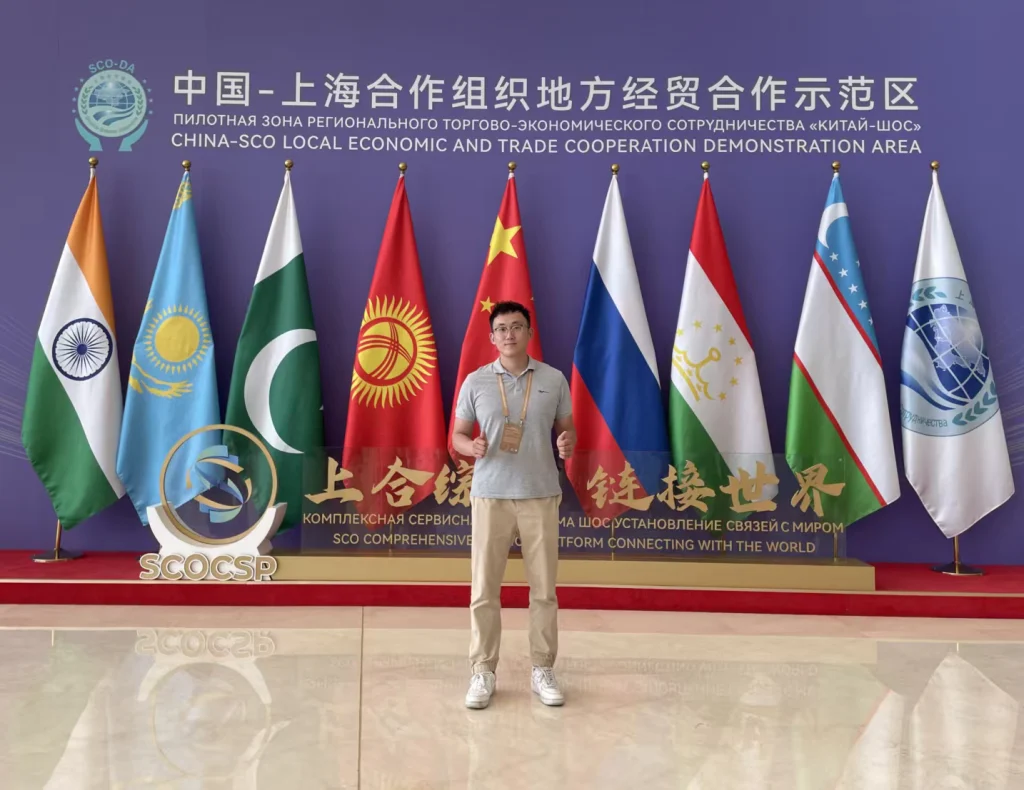
The ideal supplier of freeze-drying equipment for coffee production should be able to: demonstrate an operational production line that matches your intended scale; conduct tests using your specific coffee extract to prove the consistency and quality of the final product; and provide a comprehensive quote for the entire production line, along with a clear breakdown of operating costs. For instance, a client of MATTON in Zouping, Shandong, commissioned a complete production line from us; the facility, which began operations in late April 2026, was designed with an annual capacity of 12,000 tons of instant coffee.
• Base your evaluation of suppliers on empirical evidence. Request references to existing facilities, test results using your own coffee extract, and production batch records—do not rely solely on promotional brochures.
• Compare the “cost per kilogram” of the finished coffee. This calculation should encompass not only the equipment price but also energy consumption, yield losses, and the capital tied up in ongoing operations.
• Freeze-drying is particularly valuable when “aroma” is a core selling point of your product. A 2024 study revealed that freeze-dried instant coffee contains 1.5 to 1.6 times the concentration of volatile aromatic compounds found in spray-dried instant coffee.
This guide is designed for food plant owners, procurement managers, and small business owners currently evaluating suppliers of coffee freeze-drying equipment. It covers key assessment criteria, methods for comparing quotes, analyses of real-world projects, and often-overlooked cost components.
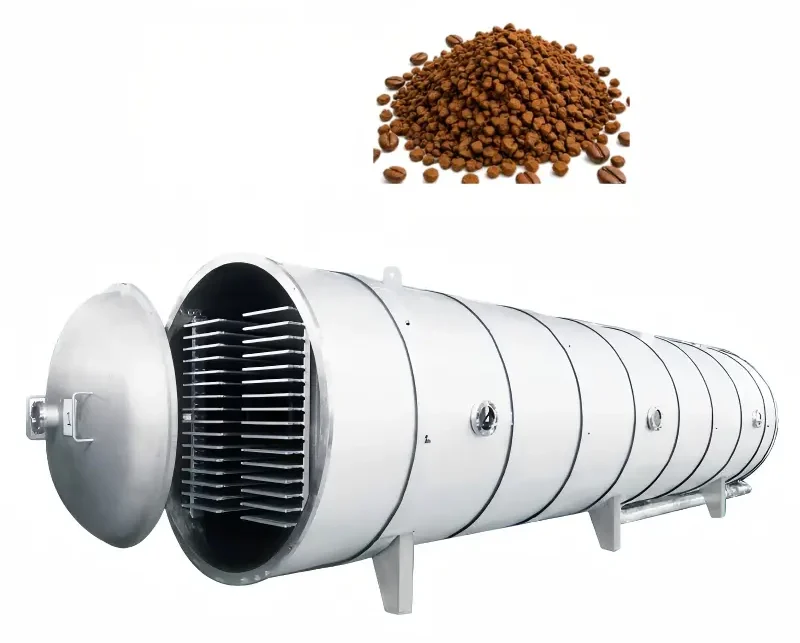
What should you look for in a coffee freeze-dryer supplier?
A good coffee freeze-dryer supplier combines equipment, process know-how and after-sales support that fit your product and volume. For coffee, three things matter most: aroma retention, batch-to-batch consistency and an energy design you can afford for the life of the plant.
Most quotation requests I see list chamber area and price, then stop. That leaves out what decides whether the line makes money: how many kilograms of dry coffee come out per day on your extract, how stable the result is from one batch to the next, and what each kilogram costs to make.
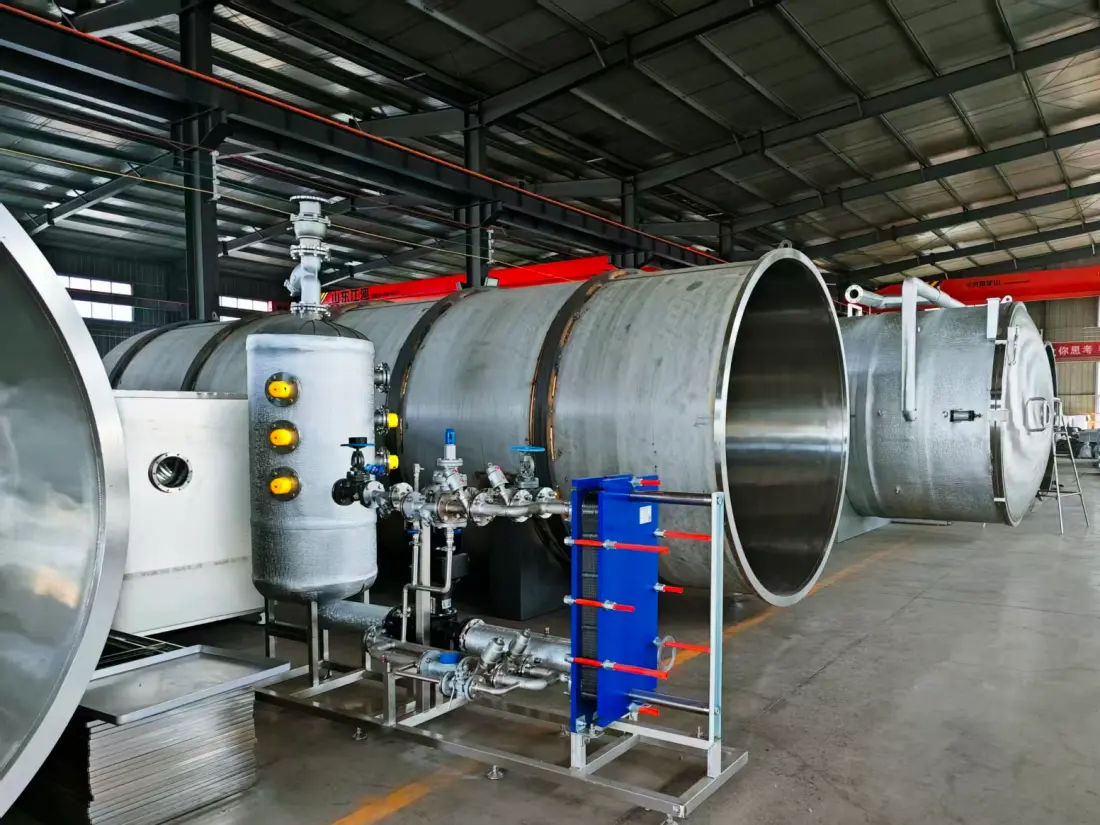
Use this table to screen suppliers before you request prices.
| What to check | What to ask | Warning sign |
|---|---|---|
| Reference plant | Name a coffee line running at a scale close to mine. Can I visit it or speak with the operator? | Only tea, pharma or lab references; no coffee |
| Capacity claim | Is this design capacity or demonstrated output, and at what concentrate solids? | Capacity given only as shelf or chamber area |
| Batch consistency | Can you show recorded freezing, sublimation and drying curves from several batches? | No process records |
| Energy design | What refrigeration type and heat recovery are used, and what is the utility demand per kg? | No per-kg utility data |
| Line scope | Who supplies extraction, concentration, crushing, sieving and packaging, and who owns the interfaces? | Freeze-dryer only; integration left to you |
| Hygiene and documents | What are the food-contact materials, cleaning method and documentation for my market? | Vague answers on materials and cleaning |
| Service | What spare parts, commissioning support and response times are in the contract? | No spare-parts plan |
Spray drying atomizes coffee concentrate into hot air. Freeze drying freezes it and removes the water by sublimation under vacuum. Freeze-drying costs more per kilogram but keeps more aroma, which is why it is the usual choice for premium soluble coffee.
A 2024 paper in the Burapha Science Journal (Chindapan and Puangngoen) compared both methods on Robusta at laboratory and industrial scale. Spray-dried powders kept roughly 45% to 50% of the volatile aroma compounds present in the concentrated brew. Freeze-dried powders held 1.52 times (laboratory) and 1.63 times (industrial) more total volatiles than spray-dried ones, with higher pyrazines and furans, two groups of roast-derived aroma compounds.
Treat that as direction, not a guarantee: one bean type, one research group. A separate open-access study in Ciência e Agrotecnologia compared freeze-drying with spray-freeze-drying across three roast levels. Freeze-drying preserved more polyphenols and dissolved solids, while spray-freeze-drying shortened processing time by 45%.
| Factor | Spray-dried | Freeze-dried |
|---|---|---|
| Drying conditions | Atomized droplets dried in hot air | Frozen, then dried by sublimation under vacuum at low temperature |
| Aroma retention | About 45%-50% of concentrate volatiles retained in the study above | 1.5-1.6 times more total volatiles than spray-dried in the same study |
| Cycle time and energy | Fast, continuous | Longer cycle and higher energy per kg; control and heat-recovery design matter |
| Product form | Fine or agglomerated powder | Porous granules after crushing and sieving |
| Typical positioning | Mass-market | Premium and specialty |
How does a freeze-dried coffee production line work?
A freeze-dried coffee production line processes roasted coffee beans into a concentrated liquid, which is then frozen; subsequently, the moisture is removed via sublimation under vacuum conditions within a freeze-dryer. The dried product then undergoes crushing, sieving, and packaging.
1. Roast and grind. Roast profile and grind size set extraction yield and flavor.
2. Extract. Hot water pulls soluble solids from the grounds.
3. Concentrate. Raising solids content means less water to remove later, which saves drying time and energy.
4. Freeze. The ice structure formed here influences drying speed and final texture.
5. Primary drying. Ice sublimes under vacuum while controlled heat feeds the process.
6. Secondary drying. Bound water is removed to reach the target moisture.
7. Crush, sieve and pack. Low-humidity handling matters, because dry coffee absorbs moisture quickly.
Color, structure, solubility and aroma of the finished product depend on the freezing state, the sublimation stage and the final drying. That is why stable operation and repeatable process control matter as much as raw capacity.
MATTON’s freeze-dried coffee production line matches front-end extraction, concentration and mixing with back-end crushing, sieving and packaging, so the line is specified as one system.
Case study: a 12,000-ton instant coffee plant in Binzhou, Shandong
A Chinese coffee company has procured a complete MATTON freeze-dried coffee production line for its new facility in Binzhou, Shandong Province. The plant is scheduled to begin operations in late April 2026, with a designed annual capacity of 12,000 tons of instant coffee.
It is important to note that 12,000 tons is merely the designed capacity; the actual production output has not been disclosed. I highlight this distinction because it is a point that prospective buyers should always clarify when consulting with suppliers.
The facility serves a dual purpose: it functions as a production site while also acting as a showcase for the equipment in operation. Data gathered during the production process is used to refine and improve the equipment—which is precisely why such “reference plants” offer significant value to future buyers.
| Status | Details |
|---|---|
| In operation | Binzhou, Shandong plant; production since late April 2026; 12,000 tons per year design capacity |
| Planned | Seven instant coffee plants in Ethiopia over the next four years; continued purchases of MATTON freeze-dried coffee machines |
| Under discussion | Uganda has invited MATTON to talk about coffee deep-processing projects |
| Not yet disclosed | Investing entity, amounts, sites, local partners and construction schedules for the overseas projects |
The overseas projects are plans and talks, not completed installations. I list them so you can see where the client’s volume may go, not as proof of installed capacity.
What a buyer can take from this: ask to see a coffee line that is running, ask how operating data returns to the equipment design, and ask whether any capacity figure is designed or demonstrated.
How do you compare coffee freeze-dryer suppliers step by step?
Compare suppliers on the same written specification, the same trial and the same cost model. Skip any of the three and price or brochure claims end up deciding for you.
- Write the spec. State daily dry output in kilograms, moisture target, solubility, granule size and target market. Include your extract’s solids content and roast level.
- Request like-for-like quotes. Ask three or four suppliers to price the same scope, from concentrate tank to packed product, with items listed separately.
- Check references. Ask for a coffee line you can visit or call. Look at how long it has run and what the operator says about downtime.
- Run a trial on your own extract. Different roasts, origins and solids contents freeze and dry differently. Run at least three batches and compare moisture, solubility, color and cup quality.
- Get utility data in writing. Electricity, cooling water, vacuum and heating demand per kilogram, measured at your extract’s solids content.
- Review documents for your market. US food facilities fall under FDA’s current good manufacturing practice and preventive controls rule, 21 CFR Part 117. EU buyers look for CE marking, and many plants also work to ISO 22000 or a HACCP plan. Ask the supplier for material certificates and a cleaning procedure that supports your plan.
- Tie acceptance to your spec. Commissioning acceptance should test your product specification, not a generic test run.
What does an affordable freeze-dryer supplier really cost you?
An affordable supplier is the one with the lowest cost per kilogram of saleable coffee over the life of the line, not the lowest quotation. Equipment price is one line in that total.
In my experience, the cheapest-looking quotes usually leave something out: line scope, utilities, spare parts or installation. When the missing items are added back, the gap often closes.
| Cost line | What drives it | How to check it |
|---|---|---|
| Equipment and installation | Chamber size, line scope, automation, civil works | Itemized quotes on identical scope |
| Energy and utilities | Refrigeration design, vacuum system, heating, cooling water | Per-kilogram figures at your solids content |
| Yield and rejects | Process stability, crushing and sieving losses | Batch records and reject rates at a reference plant |
| Labor and maintenance | Automation level, access for cleaning, spare-part availability | Maintenance schedule and recommended spares list |
| Raw material and working capital | Bean grade, price swings, payment terms | Market Research |
A simple formula keeps comparisons honest: cost per kilogram equals annualized equipment cost plus energy, labor, maintenance and packaging, divided by annual saleable kilograms. Run it for every shortlisted supplier.
MATTON’s MT series freeze dryers use dynamic temperature intelligent control with variable-frequency refrigeration and condensation heat recovery. The aim is a stable freeze-drying process that also keeps energy use in check across long production runs. Our freeze dryer energy-saving design page explains the thinking, and I would still ask us, like any supplier, for per-kilogram utility data on your extract.
Why raw material cost and working capital belong in your supplier decision
Green coffee cost and cash timing can outweigh the machine decision. Ethiopia’s 2025/26 season shows how quickly both can move.
USDA Foreign Agricultural Service reporting on Ethiopia describes record-high local cherry prices, lower international prices and rising operating costs, which weakened export incentives (Daily Coffee News summary of the 2026 report). The strain showed at washing-station level: some stations were short of cash and bought fewer cherries at harvest. Importer Algrano’s January 2026 harvest report quotes exporters putting peak cherry prices at $1.51 per kilogram, up from $0.45 the season before, and notes that buying cherry for washed processing takes heavy upfront capital (Algrano).
For an instant coffee plant, the lesson is practical. Do not price raw material as one number. Break it down by bean type, quality grade, delivery quantity and payment method.
Also build the time gap into your working capital: paying for beans, holding inventory, then collecting from customers. A washing station’s cash squeeze is a useful warning, but your own sourcing pattern decides your numbers.
Siting matters too. Building near the origin shortens the sourcing chain and lets you turn green beans into soluble products locally. Instant coffee needs roasting and grinding, extraction, concentration and drying, plus heating, cooling and water supply, so the deeper the processing, the more site conditions you must check.
Which setup fits your business: small operator or large food enterprise?
Match the line to your volume and your risk tolerance. A small business needs proof of concept and a scale-up path; a large enterprise needs a full line, stable operation and service coverage.
| Business type | Main priority | Practical approach |
|---|---|---|
| Small business or start-up | Validate product and market with limited capital | Start with a pilot or small batch unit, confirm the supplier can carry the same control logic to production size, and keep packaging cost realistic |
| Mid-size or regional brand | Consistent quality across SKUs, controlled energy cost | Specify a modular line with room to add capacity, and ask for per-kg utility data |
| Large food enterprise or origin processor | Capacity, uptime, service and compliance documentation | Require reference plants at similar scale, acceptance tests against your spec, and spare-parts and service commitments in the contract |
Multi-product plants add another angle. MATTON’s freeze-drying lines also serve tea powder and fruit and vegetable powder, so one supplier relationship can cover several beverage and ingredient products. See our freeze-dried beverage powder lines for the options. Plan changeover cleaning and recipe settings before you promise flavor-clean switching.
What should you verify about MATTON’s MT series?
MATTON’s MT series is built for solid-beverage freeze-drying lines covering coffee, tea and fruit and vegetable powders. The table shows what each feature means for a coffee plant and what to ask us to prove.
| Feature | Why it matters for coffee | Advantages |
|---|---|---|
| Dynamic temperature intelligent control | Keeps freezing and sublimation stable, which protects color, solubility and aroma | Temperature and pressure curves from several consecutive batches |
| Variable-frequency refrigeration | Adjusts cooling output to the load | Lower consumption per kg of finished product |
| Condensation heat recovery | Reuses heat from the refrigeration circuit | Where the recovered heat is used in your layout |
| Front-to-back line matching | Extraction, concentration and mixing upstream; crushing, sieving and packaging downstream | A variety of extraction processes are available, including high-temperature, low-temperature, and vacuum low-temperature methods. Costs and processes are more transparent. |
| Multi-product capability | Same platform for coffee, tea and fruit and vegetable powders | Manufacturers have more products |
MATTON offers a complete solution from pre-treatment through freeze-drying to packaging. The Zouping plant is the reference to examine, and I encourage you to ask for a visit or a call with the operator.
Common mistakes buyers make with coffee freeze-dryers
These errors show up repeatedly in projects, and most are avoidable with a few questions at the quoting stage.
- Buying on chamber area alone. Shelf area does not tell you the daily output of dry coffee on your concentrate.
- Treating design capacity as proven output. Ask for demonstrated figures.
- Skipping a trial on your own extract. Roast, origin and solids content change freezing and drying behavior.
- Ignoring the condenser and vacuum side. Water vapor has to be captured; an undersized capture system limits throughput regardless of chamber size.
- Treating packaging as an afterthought. Dry coffee takes up moisture quickly, and a poor pack-out can undo good drying.
- Pricing green coffee as one number. Grade, volume and payment terms change your cash cycle.
Frequently asked questions
Which freeze-dryer supplier is best for coffee?
The best supplier is the one that can show a running coffee line at your scale, supply batch records, and run a trial on your extract. MATTON’s reference is its Zouping, Shandong plant, in production since late April 2026 with a 12,000-ton annual design capacity; compare it and every other supplier against the checklist above.
Are there affordable freeze-dryer suppliers for coffee?
Yes, but affordable should mean low cost per kilogram of saleable coffee, not a low quotation. Compare itemized quotes on the same scope, then add energy, yield loss, spare parts and working capital before deciding.
Can one freeze-dryer line handle coffee, tea and fruit powders?
Often yes. MATTON’s TF-FZG series serves coffee, tea and fruit and vegetable powders, matched with different front-end and back-end steps. Plan changeover cleaning so flavors do not carry over.
Is freeze-dried instant coffee better than spray-dried?
It retains more aroma. In a 2024 study on Robusta, freeze-dried coffee kept 1.52 to 1.63 times more total volatile compounds than spray-dried. Whether it is better for you depends on your positioning, price point and the extra energy and cycle time you can absorb.
Next step: shortlist suppliers with a trial, not a brochure
Send your specification and a sample of your extract to three suppliers, then compare trial results, utility data and service terms side by side. If you want MATTON in that comparison, request a coffee trial run or quotation and ask for a visit to a running line.
Sources
- Chindapan, N. and Puangngoen, C. (2024). Comparative Evaluation of Volatile Aroma Compounds Content of Freeze-Dried and Spray-Dried Instant Coffees. Burapha Science Journal, 29(2). https://li05.tci-thaijo.org/index.php/buuscij/article/view/423
- Comparison of freeze-drying and spray-freeze-drying coffee with different roast degrees. Ciência e Agrotecnologia (SciELO). https://www.scielo.br/j/cagro/a/H9qzfFHzbSQTmSCVzw8N98S/?lang=en
- Daily Coffee News (June 12, 2026). Ethiopia Coffee Report: Production Up, Government Promoting Modernization (summary of USDA FAS Ethiopia Coffee Annual). https://dailycoffeenews.com/2026/06/12/ethiopia-coffee-report-production-up-government-promoting-modernization/
- USDA Foreign Agricultural Service, coffee data and analysis. https://fas.usda.gov/data/commodities/coffee
- Algrano (January 13, 2026). Ethiopia Coffee Harvest 2026: High cherry prices and a tighter washed outlook. https://algrano.com/learn/ethiopia-coffee-harvest-report-2026
- U.S. FDA / eCFR. 21 CFR Part 117, Current Good Manufacturing Practice, Hazard Analysis, and Risk-Based Preventive Controls for Human Food. https://www.ecfr.gov/current/title-21/chapter-I/subchapter-B/part-117