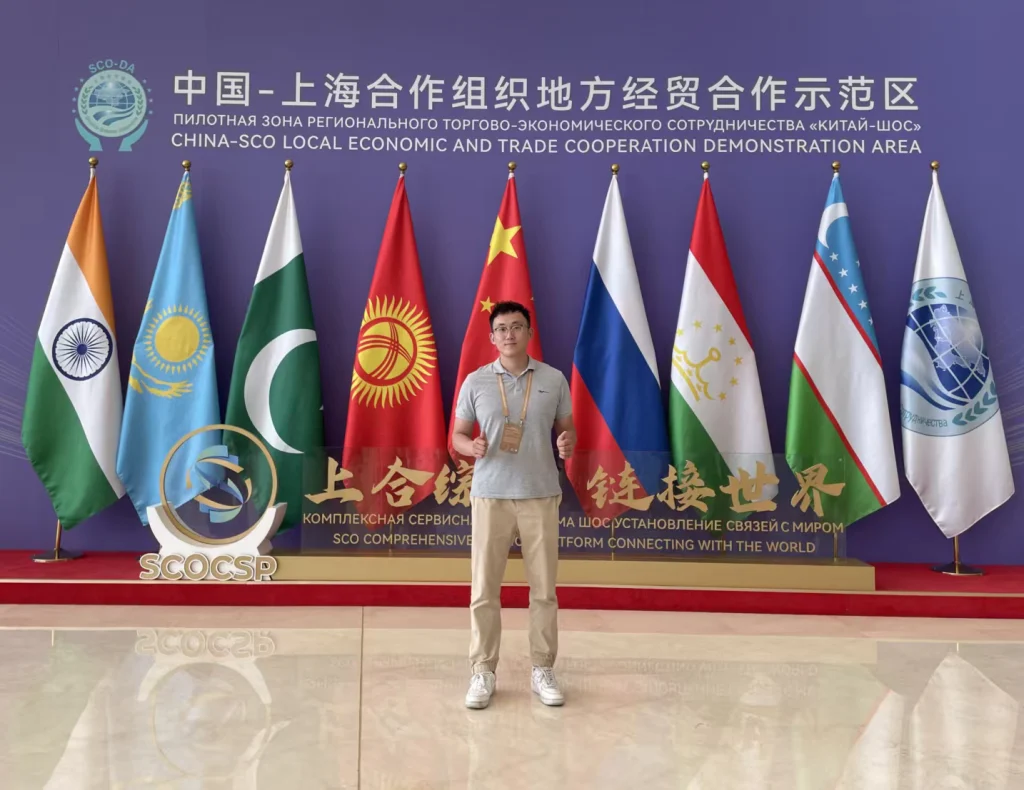
I spend most of my year on factory floors and trade show booths, talking to people who want to turn fresh coffee cherries, durian, and tropical fruit into shelf-stable, high-value products. This article shares what I’ve learned building commercial freeze dryers, multi-lane IQF freezers, and food retort autoclaves for clients from Ho Chi Minh City to Bogotá to Panama City.
What Is a Commercial Freeze Dryer and Why Does It Matter for Food Processors?
A commercial freeze dryer (also called a commercial lyophilizer) removes moisture from food under vacuum at sub-zero temperatures, preserving color, nutrients, and shape far better than hot-air drying. For coffee, durian, and fruit exporters, this means a premium product that commands a premium price in export markets.
Unlike simple dehydration, freeze drying keeps aroma compounds intact — critical for freeze-dried coffee — and prevents the mushy texture that hot drying causes in durian and berries. That’s why so many processors I meet are moving from basic drying tunnels toward a full freeze drying production line.
How Did MATTON Showcase Its Freeze-Drying Machines at Vietfood & Beverage and ProPack?
I attended the Vietfood & Beverage and ProPack exhibitions in person last week, and the enthusiastic response from Vietnamese food manufacturers exceeded our team’s expectations. Visitors were not merely driven by curiosity—many arrived with actual production data and had already finalized locations for new factories.
What did we present at Vietfood & Beverage?
At the booth, we not only showcased a fully operational commercial freeze-dryer demonstration unit with a 50kg capacity but also displayed sample trays of freeze-dried durian, dragon fruit, and instant coffee granules. Buyers could observe, touch, and taste the finished products firsthand before inquiring about drying chamber dimensions and production capacity.

What did we present at Vietfood & Beverage?
ProPack drew a more industrial crowd — plant engineers and investors comparing our equipment against European brands. We walked them through our vacuum system, PLC control cabinet (Siemens-based), and our stainless-steel drying silo construction, which many said matched or exceeded what they’d seen from pricier suppliers.
Why Are Vietnamese Clients Building New Freeze-Dried Coffee, Durian, and Fruit Facilities?
Vietnam is the world’s second-largest coffee producer and a major durian exporter to China, so the economics are obvious. Several clients I spoke with at the shows want to add freeze-dried instant coffee and durian snack lines to capture more margin instead of exporting raw beans and fresh fruit.
We’re now in technical discussions with three Vietnamese groups about building complete facilities: one focused on freeze-dried coffee extract, one on durian pulp, and one on mixed tropical fruit (mango, pineapple, dragon fruit). Each requires a slightly different [freeze drying production line](/products/freeze-drying-production-line) configuration.
What does a Vietnamese freeze-dried coffee facility need?
Coffee extract freeze drying needs a fast quick-freeze step to lock in aroma, followed by a low-temperature drying cycle. We recommend our LK-2500 quick freeze room paired with our ML-FD series commercial lyophilizer for consistent granule quality at scale.
What does a durian freeze-drying line require?
Due to the strong odor and high fat content of durian, the heating system specifications must be precisely calculated prior to the drying process, and additional cold storage facilities are required to support our specialized processing workflow. Given the soft texture of the fruit, I designed a production line that involves low-temperature freezing before slicing, along with a custom-engineered heating system and refrigeration units specifically sized to handle Vietnam’s hot climate.

What Makes MATTON’s Freeze Drying Production Line Different?
All our manufacturing processes—including fabrication, welding, assembly, electrical engineering, and Factory Acceptance Testing (FAT)—are carried out in-house. This translates to shorter lead times, stricter quality control, and full material traceability from raw steel to the finished equipment—advantages I consistently highlighted to visitors at our booth. A key strength lies in our freeze-dryer chambers; these are welded using robotic arms and a plasma welding process (performed in our dedicated plasma welding workshop). This superior welding ensures exceptional sealing integrity and vacuum performance.
| Feature | MATTON Advantage |
|---|---|
| Drying chamber material | SUS304 stainless steel, wire-drawn interior |
| Heating plates | Anodized aluminum alloy, ±1°C uniformity |
| Vacuum system | Roots pump + water ring pump combination |
| Control system | Siemens PLC, touchscreen HMI |
| Residual moisture | Below 3% (meets national standard) |
| Factory testing | Full FAT with pressure and leak testing before shipment |
How Does a Multi-Lane IQF Freezer Complement a Freeze-Dried Production Line?
Many processors ask whether they need a multi-lane IQF freezer if they’re already installing a freeze dryer. The honest answer: it depends on your product mix. IQF freezing suits whole pieces meant to stay frozen, while freeze drying targets shelf-stable, ambient-storage products.
Some of our Vietnamese and Latin American clients run both lines in parallel — IQF for retail frozen fruit and freeze drying for premium dried snacks and coffee — using the same raw material intake and quick-freeze infrastructure to reduce capital cost.
Yes. Our quick freeze room (used ahead of the drying chamber) can also feed a multi-lane IQF tunnel with minor layout adjustments, letting processors split output between frozen and freeze-dried SKUs without duplicating refrigeration systems entirely.
What Role Does a Food Retort Autoclave Play in a Complete Processing Facility?
A [food retort autoclave](/products/food-retort-autoclave) sterilizes packaged food using pressurized steam heat, extending shelf life for pouches, cans, and jars. It’s a different preservation method from freeze drying, but many multi-product factories run both technologies side by side under one roof.
Clients producing sauces, ready meals, or canned tropical fruit alongside freeze-dried snacks often ask us to quote a retort autoclave and a freeze dryer together, since both need similar utilities — steam, compressed air, and process water — which simplifies facility planning.
What Happened During Our Freeze-Drying Project in Colombia?
Our Colombia project centers on a coffee cooperative looking to freeze-dry specialty-grade beans for export to Europe and North America. I’ve been on calls with their engineering team reviewing chamber sizing, altitude-adjusted vacuum settings, and local voltage requirements before finalizing the design.
Colombia’s high-altitude coffee regions posed an interesting engineering question: how does thinner air affect vacuum pump performance? We adjusted our Roots pump and water ring vacuum unit specifications to compensate, ensuring the design vacuum degree of 15Pa is still achievable on-site.
What technical adjustments were needed for high-altitude operation?
We recalculated pump displacement and added margin to the pre-vacuum stage, since lower atmospheric pressure at altitude changes pump-down times. Our engineering team confirmed the adjusted 30-minute pre-vacuum cycle still holds at the client’s elevation.
How Are We Supporting Panama’s National Agricultural Initiative?
It’s a genuine honor for our team to be part of a major agricultural modernization initiative backed by the Panamanian government, aimed at helping local farmers add value to tropical produce through freeze-drying technology rather than exporting only raw fruit.
We’re working alongside government agricultural advisors and local processors to plan freeze-drying capacity for pineapple, mango, and other Panamanian crops, discussing everything from container-based modular units to full-scale industrial freeze drying production lines.
Why does government-backed investment matter for freeze-drying adoption?
Government support de-risks the upfront capital investment for small and mid-size producers who couldn’t otherwise afford a commercial freeze dryer. It also signals long-term demand, which helps us plan spare parts, training, and after-sales support locally.
What Do Food Factory Owners Worldwide Ask Us About New Freeze-Drying Technology?
At the exhibition, buyers from around the world—including regions such as Vietnam, Colombia, and Panama—consistently raised questions that, beyond the specific capacity of the freeze-dryers, focused primarily on three areas: energy efficiency, the level of automation, and how to shorten processing cycles without compromising product quality. These questions are addressed individually below.
How can energy costs be reduced?
Our heating system utilizes a plate heat exchanger, electric auxiliary heating, and variable-frequency circulation pumps to efficiently recover and distribute heat; meanwhile, the heating elements employ zone-based control, ensuring that heat is applied only to the areas currently undergoing the drying process.
How automated is a modern freeze dryer?
Our control cabinets feature Siemens PLCs and touch-screen HMIs, supporting the storage of thousands of product process recipes, automatic data logging, and intelligent temperature control—significantly reducing the need for continuous manual monitoring during lengthy drying cycles.
How can cycle time be shortened safely?
The processing cycle depends on the product’s thickness and moisture content, as well as the temperature uniformity of the heating plates. Vacuum pumps and refrigeration units are also required to ensure effective water vapor capture. Our heating plates maintain a surface temperature variance of within ±1°C and feature a circulation rate twice the industry standard, enabling processors to accelerate throughput without risking uneven drying or product damage.
What Is the Production Capacity of MATTON’s Commercial Lyophilizer?
Our ML-FD/500KG model handles roughly 500KG of fresh material per batch, with a 750L condensation capacity. Below is the core specification table I share with every factory owner evaluating our commercial freeze dryer line.
| Specification | Detail |
|---|---|
| Model | ML-FD/500KG – 750L /VT |
| Condensation capacity | 750L per batch |
| Heating system | Electric heating, 63KW |
| Heating temperature range | Normal temperature to 95°C |
| Charging tray area | 58.46 m², 132 trays per cabin |
| Tray size | 610×710×35mm |
| Cold trap | Φ2500×2500×10mm, carbon steel |
| Design vacuum degree | 15Pa (extreme) |
| Residual moisture | Below 3% |
| Ice melting time | Under 45 minutes per batch |
| Refrigeration unit | 75P (freeze dryer) + 18P (cold room) |
We specifically designed this model configuration for a Vietnamese food technology company; it is ideally suited for medium-sized coffee cooperatives and fruit exporters, as it meets the need to transition from pilot-scale drying to full-scale production without requiring the massive capital investment needed for ultra-large facilities.
Can capacity be scaled up or down?
Yes. We customize drying silo size, trolley count, and heating plate quantity per client. Smaller pilot units and larger multi-cabin configurations both run on the same core technology platform, so scaling later doesn’t require re-engineering the whole system.
| Item | unit | FD-5 | FD-10 | FD-20 | FD-30 | FD-50 | FD-75 | FD-100 | FD-120 | FD-200 |
| Shelf area | M2 | 5 | 10 | 20 | 30 | 50 | 75 | 100 | 120 | 200 |
| Condensation capacity | L | 60 | 150 | 300 | 450 | 600 | 900 | 1200 | 1500 | 2500 |
| Capacity | KG | 50 | 120 | 240 | 350 | 600 | 900 | 1200 | 1500 | 2500 |
| Machine temp. | ℃ | -45-120 | ||||||||
| vacuum | Pa | 15 | ||||||||
| anti-frost | showering and watering | |||||||||
| working environment | temperature 5to 35 relative humidity ≤ 80 | |||||||||
| cooling water | ≤ 25℃ | |||||||||
How Can You Get a Quote for a MATTON Freeze Drying Production Line?
Getting a quote is straightforward: send us your target output (kg/batch or tons/year), the product you’re processing (coffee, durian, fruit, etc.), and your local voltage. We’ll return a detailed equipment list, capacity chart, and FOB price within a few business days.
We also welcome factory visits and third-party inspections in Zhucheng before you commit, and our team can join video calls to walk through drawings, PLC screens, and material certificates so you know exactly what you’re buying.
Frequently Asked Questions
1. What is a multi-lane IQF freezer used for?
A multi-lane IQF (Individually Quick Frozen) freezer rapidly freezes fruit, vegetable, or seafood pieces separately so they don’t clump, preserving texture and making the product easy to portion and package for retail or industrial customers.
2. How is a food retort autoclave different from a freeze dryer?
A retort autoclave sterilizes sealed packaging using pressurized steam heat for shelf-stable canned or pouched food, while a freeze dryer removes moisture under vacuum to create lightweight, ambient-stable dried products like coffee or fruit snacks.
3. What products work best with freeze drying versus quick freezing?
Coffee extract, durian, berries, and herbs generally freeze-dry well because they retain aroma and shape. Bulkier items like whole vegetables or seafood portions often suit a quick freezer or IQF line better for retail frozen sale.
4. How long does it take to install a commercial freeze dryer?
Typical delivery is around 50 days after deposit, depending on customization. Installation and commissioning at the client’s site usually take an additional two to four weeks, including electrical hookup, vacuum testing, and staff training.
5. Does MATTON offer after-sales support outside China?
Yes. We support customers in Vietnam, Thailand, Colombia, Mexico, Dubai, Uzbekistan, and other regions through remote troubleshooting, spare parts shipment, and on-site engineering services when necessary; we also provide a two-year warranty.
Ready to Talk About Your Freeze-Drying Project?
Whether you’re planning a coffee facility in Vietnam, a fruit line in Colombia, or a national agricultural project in Panama, I’d like to hear about it. Contact our team today for a free consultation and a tailored quote for your commercial freeze dryer, IQF freezer, or retort autoclave line.