MATTON has long been a leading Chinese manufacturer. Its origins trace back to a state-owned machinery plant established in 1989, which was restructured into a private enterprise in 1995; the company subsequently expanded into the manufacture of sterilization retorts and freeze-dryers in 2015. Centered around Zhucheng Maiteng Machinery Technology, the group has established multiple subsidiaries—including Zhucheng Maidun—as well as a network of global offices.
The freeze dryers and sterilization retorts manufactured by Matton are core equipment in the daily operations of food processing plants. Simply put, freeze dryers utilize the principle of sublimation to remove moisture from food while preserving its active nutrients, whereas sterilization retorts heat and sterilize sealed canned or pouched products under controlled temperature and pressure, ensuring shelf stability at room temperature without the need for preservatives.
Our standard freeze-drying lines offer batch processing capacities ranging from 50 kg to 3,000 kg, while our sterilization systems handle between 800 and 5,000 cans per cycle, depending on the model. If you have already determined your product type and target output, our engineering team can provide a complimentary production line layout proposal and quotation within 24 hours. Below, we share insights from Matton’s global production facility projects, illustrating our experience through real-world examples.
What Does a Modern Freeze-Dried Food Production Line Look Like?
A freeze-dried food production line is not a single piece of equipment but a series of processes that work in concert; if these stages are not properly coordinated, the final product may suffer from issues such as shrinkage, discoloration, or poor rehydration properties. In our factory configurations, the production line typically encompasses stages such as raw material pretreatment, pre-freezing, vacuum sublimation, and packaging. Here is a video of our client’s production site:
How do you choose a freeze dryer for high-value-added food products?
The most critical factor is verifying whether the factory possesses extensive experience with your specific product. Take, for instance, our clients in Vietnam and Malaysia who produce bird’s nest products; the pre-processing stage is often the decisive factor in the product’s ultimate quality and value.
In the project cited here, the client selected “first-harvest” bird’s nest cups sourced from the pristine rainforest regions of Indonesia and Malaysia. They required a sialic acid content exceeding 10% and minimal impurities, alongside traceability codes to certify that the product had undergone no bleaching or coating treatments. Faced with such a prized ingredient, they conducted thorough evaluations before ultimately choosing the MATTON Group as their partner. While our offices may not be the most luxurious, we are home to a team of pragmatic engineers and highly dedicated international business managers.
We have designed a specific process for our clients that includes grading and rehydration; the bird’s nest undergoes cleaning, manual impurity removal (without the use of chemical agents), soaking, and low-temperature double-boiling. Only after these pre-processing steps are completed is the product loaded onto the freeze-dryer trays. That is why we always emphasize to clients planning to set up a freeze-drying facility (https://www.mattonmachinery.com/freeze-dryer/) that the pre-processing workshop, water treatment system, and refrigeration capacity are just as critical as the freeze-dryer itself—since the final quality of the product depends heavily on a variety of factors.
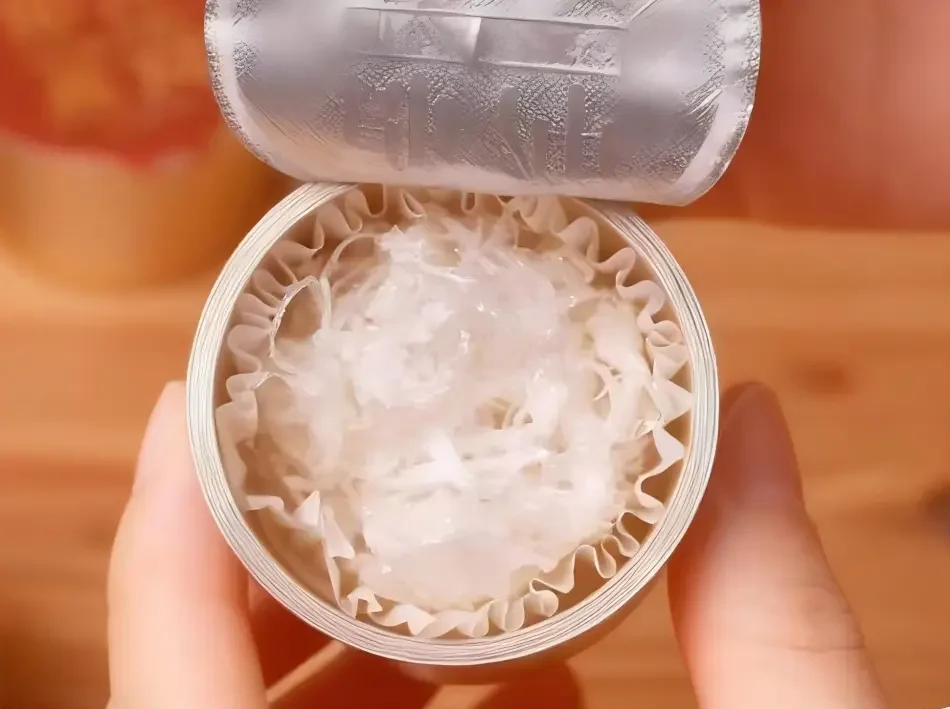
How Do You Freeze-Dry Bird’s Nest Without Losing Sialic Acid?
Sialic acid is heat-sensitive, so every temperature step before the freeze dryer even starts has to be controlled tightly. Here is the workflow our client follows, step by step, which we’ve seen replicated across several nutraceutical and health-food clients using our vacuum freeze dryers.
Soaking: Water temperature is held at 20–25°C. Above 30°C the nest strands become brittle and break; below 15°C they don’t soften fully. Soaking time runs 5–8 hours for 4A-grade nests and 10–12 hours for 6A-grade, until the strands are fully relaxed with no hard core remaining. Low-mineral purified water is used throughout, since calcium and magnesium ions bind with the proteins and cause sediment.
Double-boiling: This happens over a water bath, never direct heat, capped at 80°C. Above 90°C, sialic acid loss can exceed 30% in a short time. The stewing time is 20–30 minutes, just until the nest turns semi-translucent and gelatinous — overcooking breaks down the structure before it even reaches the dryer. No sugar or thickener is added to plain freeze-dried bird’s nest, because these raise the eutectic point and prevent complete pre-freezing, which causes structural collapse later. If a protective agent is genuinely needed (for example, probiotic-enriched bird’s nest), only sucrose or mannitol at 5% or less is used to keep the ice crystal structure stable.
Plating: Product is spread no more than 10mm thick per tray, with a maximum 2mm thickness variation across a batch, and containers are filled to no more than two-thirds capacity to prevent splashing during sublimation. Aluminum or food-grade plastic trays are preferred over glass, which can crack under thermal stress.
Pre-freeze prep: After soaking, the product is centrifuged for about 2 minutes to bring moisture content down to 70–80%. Too much residual water leads to coarse ice crystals that damage the cell structure. The stewed product is then cut into blocks of 4g or less, so heat and vacuum reach the center evenly during drying — nobody wants a freeze-dried piece that’s dry on the outside and damp in the middle.
What Mistakes Happen Most Often in Pretreatment, and How Do You Avoid Them?
We get asked this constantly by new operators evaluating a freeze-dried food production line, so it’s worth listing plainly.
| Common Mistake | Effect on Final Product | How to Avoid It |
|---|---|---|
| Over-soaking | Strand breakage, poor rehydration after drying | Check softness at set intervals; don’t rely on a fixed timer alone |
| Stewing above 80°C | Sialic acid degradation, nutrient loss | Use a calibrated water bath with continuous monitoring |
| Tray loading over 10mm | Incomplete sublimation, wet core | Standardize tray depth and weigh-check each batch |
| Adding high sugar concentration | Eutectic point rises 5–8°C, incomplete pre-freeze, collapse | Match protective agent type and dose to the freeze-drying curve |
| Skipping small-batch trials | Wrong process parameters scaled to full production | Always run a pilot batch to confirm the eutectic point (roughly -1°C for bird’s nest) before scaling up |
Getting these right is how a factory reaches nutrient retention above 95% along with intact, quickly rehydrating final texture — which is really the whole commercial point of freeze-drying a premium ingredient like bird’s nest in the first place.
What Are the Technical Specifications of a Matton Freeze Dryer?
Buyers evaluating freeze dryer manufacturers are typically most concerned with specific parameters, so we have listed the typical specification ranges for our standard commercial freeze dryer series. Specific configurations depend on your product and target batch output; our team determines shelf area and condenser specifications based on actual moisture load rather than generic formulas. In most cases, these are custom-built machines.
| Item | unit | FD-5 | FD-10 | FD-20 | FD-30 | FD-50 | FD-75 | FD-100 | FD-120 | FD-200 |
| Shelf area | M2 | 5 | 10 | 20 | 30 | 50 | 75 | 100 | 120 | 201 |
| Condensation capacity | L | 60 | 150 | 300 | 450 | 700 | 900 | 1200 | 1500 | 3200 |
| Capacity | KG | 50 | 120 | 240 | 350 | 600 | 900 | 1200 | 1500 | 2500 |
| Machine temp. | ℃ | -45-120 | ||||||||
| vacuum pump | Two-stage vacuum pump: rotary vane pump, water ring pump, Roots pump, dry pump (oil-free) | |||||||||
| Refrigeration unit | Two-stage or cascade units; supported brands: Bitzer, Frascold. | |||||||||
| working environment | temperature 5to 45 relative humidity ≤ 80 | |||||||||
| cooling water | ≤ 28 | |||||||||
Even for products with high moisture content, such as bird’s nest soup, we significantly accelerate the production cycle by combining powerful vacuum pump systems with robust refrigeration capabilities; for bird’s nest or similar products, the total cycle time typically ranges from 18 to 28 hours, depending on the loading thickness (whereas industry standards generally exceed 30 hours). Every unit we deliver features data logging capabilities for shelf temperature, product temperature, and vacuum levels, enabling quality teams to trace the drying curve for each batch—a requirement shared by both regulatory bodies and OEM/private-label clients. For complete equipment drawings and footprint specifications, please refer to our “Freeze-Dried Food Production Line” page.
How Does a Retort Machine Produce Ready-to-Eat Bird’s Nest?
Not every bird’s nest product is freeze-dried — a large share of the market is sold as ready-to-eat bottled bird’s nest in sugar water, and that product line runs through a retort machine instead. This is where sterilization, not drying, is the goal, and the process our client uses looks like this.
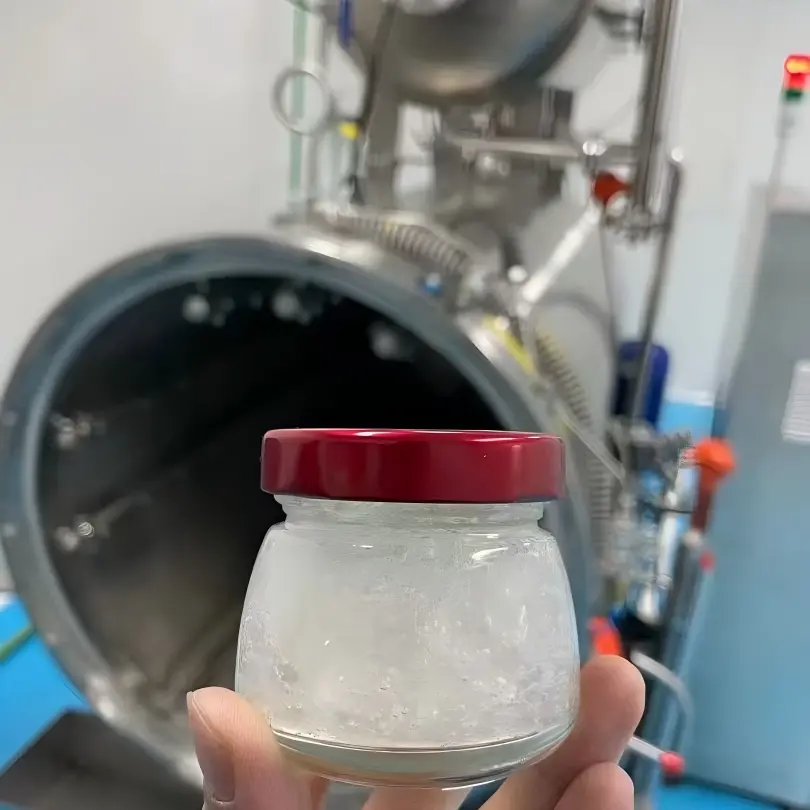
The process we designed for our client in Perak, Malaysia, is as follows: Bird’s nests that have undergone soaking and manual impurity removal (using the previously mentioned soaking parameters of 20–25°C) are weighed into individual portions (typically 6g per bottle); rock sugar syrup is added, and the bottles are capped and vacuum-sealed.
The sealed bottles proceed directly to a retort for high-temperature sterilization. While the standard sterilization temperature is 118°C—which preserves sialic acid content while meeting commercial sterility standards—some production lines utilize 121°C to achieve a longer shelf life. Our sterilization equipment employs a three-stage, stepped heating program to ensure uniform heating of all bottled products to the target temperature, followed by a constant temperature and pressure phase; this method promotes even heat distribution and penetration, thereby ensuring consistent product texture across all bottles. The cooling process also utilizes a four-stage, stepped program to ensure synchronized reduction of pressure and temperature; this detail is crucial for preventing bottle breakage or seal leakage, as pressure-temperature mismatches during cooling are the most common cause of sterilization-related bottle damage reported by first-time operators.
What Are the Technical Specifications of a Retort Food Machine?
A retort food machine is judged on how precisely it holds temperature and pressure across the entire load, not just on chamber size, so our spec sheets always lead with control accuracy.
| Model Range | Basket Capacity | Chamber Size | Working Pressure | Temperature Range | Heating Medium | Control System |
|---|---|---|---|---|---|---|
| Small batch | 200–600 jars/pouches | Ø800 x 1,200mm | 0–0.4 MPa | 100–135°C | Steam/water spray, rotary option | PLC + PID, F0 auto-calculation |
| Mid-scale | 800–1,800 jars/pouches | Ø1,200 x 1,800mm | 0–0.4 MPa | 100–152°C | Steam/water spray, rotary option | PLC + PID, F0 auto-calculation |
| Industrial | 2,000–3,000+ jars/pouches | Ø1,600 x 6,400mm | 0–0.4 MPa | 100–152°C | Steam/water spray, rotary option | PLC + SCADA, full data logging |
Every Matton retort is equipped with high-precision temperature and pressure sensors. In compliance with US NFPA standards and the Chinese national standard SN/T0400.6-2005, temperature control is accurate to within 0.5°C, with data transmitted in real-time to a PID-controlled PLC system. The system not only calculates the F0 value in real-time but also logs sterilization temperature, time, pressure curves, and F0 values to the central controller to ensure traceability. This is a standard feature across our commercial food sterilization equipment line, as most food safety audits—whether for bird’s nest products, canned goods, or ready-made meals—require access to this specific data.
The retort utilizes a stainless steel spiral-wound heat exchanger for indirect heating and cooling; this specific heat exchanger design was developed through a collaboration between our company and a Polish firm. The heat exchanger recovers low-temperature heat and operates with minimal pressure loss, effectively conserving energy; it maximizes the utilization of thermal energy from steam, thereby reducing steam consumption (by an average of 20%).
Freeze Dryer vs Retort Machine: Which Process Fits Your Product?
This is the question we field most from new bird’s nest brands and other health-food startups, so we lay it out plainly.
| Factor | Freeze Dryer | Retort Machine |
|---|---|---|
| Best for | Powders, whole-strand dried nests, nutraceutical formats | Ready-to-eat bottled or pouched products |
| Shelf life without preservatives | Long, if packaging keeps moisture out | Long, achieved through commercial sterility |
| Nutrient retention | Very high (≥95% achievable with correct curve) | High, but some heat-sensitive compounds reduce slightly |
| Texture after processing | Light, porous, rehydrates quickly | Ready to eat, soft, gel-like texture straight from the jar |
| Typical buyer | Supplement brands, dry-format retail, export in dry form | Beverage-style bottled bird’s nest, mass retail, gifting sets |
| Capital cost | Higher per unit of throughput | Lower per unit of throughput |
Many of our clients actually run both — freeze-drying a premium dry-format line while retort-processing a lower-cost bottled line from the same raw material batch, which spreads fixed costs across two product categories instead of one.
What Results Did This Bird’s Nest Producer Actually See?
Data speaks louder than promises. For the two clients mentioned, the situation changed dramatically after they standardized their pre-processing workflows and adopted Matton equipment.
Before implementing the controlled freeze-drying production line, the manufacturer faced finished-product loss rates of 12%–15% per batch due to broken bird’s nest strands and uneven rehydration; these losses stemmed primarily from soaking temperatures exceeding the optimal 20–25°C range and uneven tray loading. After standardizing soaking temperatures, stewing times, and tray thicknesses to the aforementioned parameters, the loss rate dropped to below 4%. Laboratory tests showed that sialic acid retention consistently remained above 95% across batches—whereas, prior to adopting the new process, this figure had fluctuated between 80% and 90%, depending on which employee was handling the stewing stage that day.
Most importantly, the new products are highly popular; freeze-dried products are gaining increasing popularity worldwide, and as a result, the company has secured a large volume of international orders.
In the retort sterilization stage, the transition from manual operation to a PLC-controlled system featuring automatic F0-value calculation has significantly reduced batch-to-batch texture variations. This is because every bottle now follows the same heat penetration curve, regardless of its specific placement within the retort. Furthermore, the manufacturer can now automatically generate complete digital batch records. This capability has proven unexpectedly valuable: when regional distributors require sterilization-related documentation for retail listing agreements, data that previously demanded time-consuming manual compilation can now be simply exported directly from the control system.
Energy consumption per batch has also decreased, primarily because both units utilize staged heating and cooling programs; this avoids the steam and electricity waste caused by temperature overshoot—a common issue with older, single-stage equipment. These improvements were achieved without altering raw material sourcing, relying entirely on rigorous process control and the equipment’s ability to precisely maintain the required process parameters.
What Should You Look for When Choosing a Freeze Dryer Factory Supplier?
Since a lot of buyers are comparing multiple suppliers at once, it helps to know what actually separates a reliable freeze-dried food production line vendor from one that will cause problems six months after installation.
Data logging and traceability. If a supplier’s control system doesn’t record shelf temperature, product temperature, and vacuum level per batch, you’ll struggle to prove nutrient retention or troubleshoot a failed batch later. This matters even more for regulated categories like nutraceuticals, where auditors expect a full drying curve on file.
Condenser sizing matched to your product, not a generic template. Bird’s nest, fruit, and pharmaceutical actives all release moisture differently during sublimation. A condenser sized for a generic fruit load will underperform on a high-moisture protein product like soaked bird’s nest, leading to longer cycles and inconsistent secondary drying.
Localization of services and assurance of spare parts supply. Core components—such as vacuum pumps, refrigeration compressors, and PLC modules—will eventually require maintenance. Please ensure that you can source spare parts directly from local suppliers.
Base your decisions on actual production data rather than relying solely on marketing materials. Ask existing customers using similar products for genuine batch data—including cycle times and processing methods—instead of making a decision based only on a price quote.
How Can You Get a Quote for a Freeze Dryer Factory Setup?
We have streamlined this process, as delays in quoting often stem from missing information rather than the complexity of the process itself. To provide an accurate quote and lead time, we typically require the following information: your target daily or batch production output; raw material moisture content and density; the required processing method (freeze-drying, high-temperature/high-pressure sterilization/cooking, or a combination of both); available facility space; and the target market (as export markets may require specific certifications such as CE or ISO).
Upon receipt of this information, our engineering team will calculate the necessary shelf area or tray capacity and determine condenser or steam load requirements. We will then issue a formal quotation within one to two business days; please let us know if you also require drawings, delivery schedules, or details regarding installation support. We also offer Factory Acceptance Testing (FAT) prior to shipment, as well as post-installation commissioning support or full EPC project services. You can contact our sales engineers directly via our [contact us](https://freezedrymachinery.com/contact-us/) or submit your production details to request a callback.
Frequently Asked Questions
How much does a freeze dryer factory setup cost?
Costs depend largely on the capacity of the freeze dryer. Pilot-scale equipment intended for R&D or small-batch production is relatively inexpensive, whereas full-scale industrial production lines—featuring over 50 square meters of shelf area and automated control systems—come at a much higher cost but offer superior economies of scale. We will provide a precise quotation based on your production volume and product type.
Can one retort machine handle both glass jars and pouches?
Yes, most of our retort food machine models handle glass jars, cans, and flexible pouches in the same chamber, though basket configuration changes between formats. If you plan to run mixed formats, tell us during quoting so we can size the basket racks correctly from the start rather than retrofitting later
How long does a bird’s nest freeze-drying cycle typically take?
For products such as soups or bird’s nest with very high water content, the total cycle time is 28 hours (whereas the industry standard is typically 30–36 hours). Key factors influencing this include the product’s heat sensitivity, the thickness of the load, and the moisture content.
What certifications should a retort machine have for export markets?
Most export markets require products to bear the CE mark, and components in contact with food must comply with FDA or relevant food-grade material standards. Some markets also mandate that the autoclave vessel itself obtain pressure vessel certification. We also hold ASME certification and are one of the companies that draft industry standards.
Do I need both a freeze dryer and a retort machine, or just one?
It depends on your product line. If you’re only producing one format — either dry freeze-dried nest or ready-to-eat bottled nest — one machine covers it. If you want both a premium dry product and a mass-market bottled product from the same raw material supply, running both machines lets you serve two price points without duplicating your raw material sourcing and pretreatment room.
—
Matton designs and manufactures freeze dryers and retort machines for food, nutraceutical, and pharmaceutical producers worldwide. Contact our engineering team for a project-specific quote and line layout.