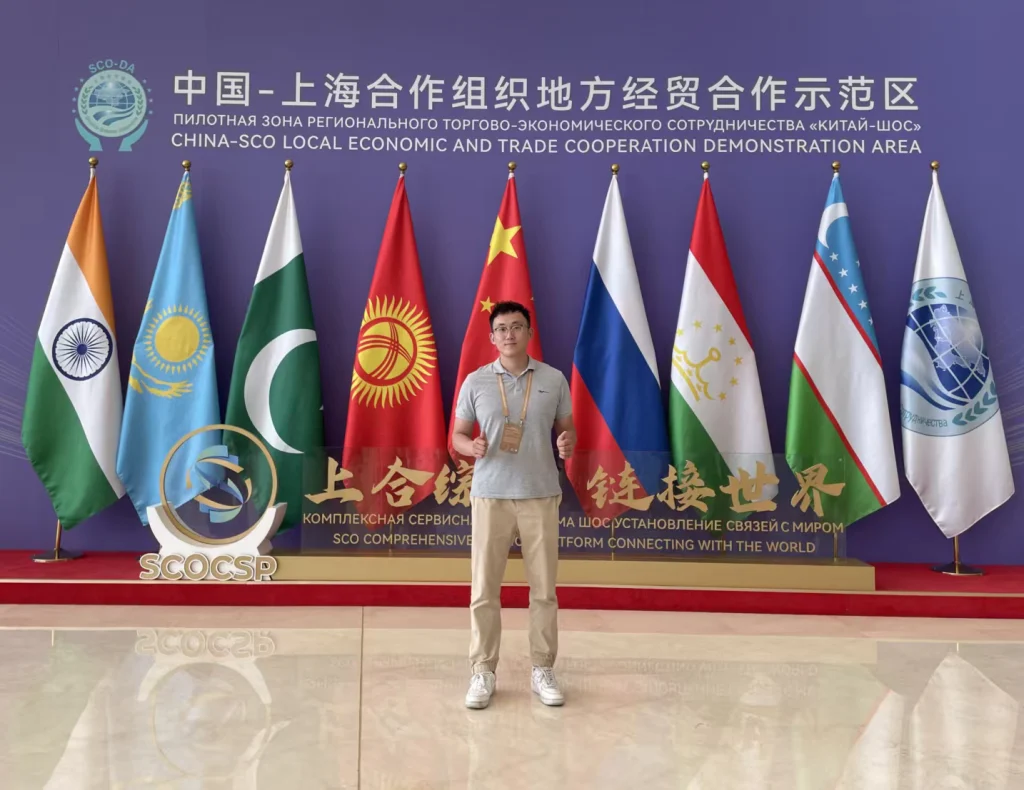
August has been a quieter month for us in terms of website updates, but it has been one of the busiest months for our team behind the scenes.
At Matton, we have spent much of August traveling, attending exhibitions in Vietnam and Shanghai, meeting customers face-to-face, discussing new food processing projects, and working with our engineering team on customized equipment solutions.
One of the most interesting projects we undertook during this period was the development of a milk sterilization system for a client in Kazakhstan. The client sought to significantly extend the product’s shelf life; in response, we developed a high-temperature, high-pressure sterilization solution that maximized the use of their existing UHT production line to achieve a shelf life of 12 months. We ultimately delivered a complete production line—featuring a capacity of 4,000 bottles per hour, a high-pressure sterilization autoclave, and an automated palletizing robot.
At the same time, our discussions with customers reinforced something we have seen repeatedly over the years: industrial food processing equipment cannot be selected simply by looking at a machine catalog. Every project has its own product characteristics, packaging format, production capacity, thermal requirements and investment objectives.
This is why we continue to focus on engineering solutions rather than simply selling individual machines.
Why Was Matton Less Active Online During August?
In August, our team participated in trade shows in Ho Chi Minh City and Shanghai and visited six cities: Ho Chi Minh City, Bangkok, Jakarta, Shanghai, Urumqi, and Tashkent. We dedicated significant time to direct engagement with food manufacturers, processors, the Industrial University of Ho Chi Minh City, and engineering teams.
For us, these conversations are extremely valuable because customers often describe their production challenges more clearly in person than they can through email.
A customer may initially tell us, “We need a retort machine.”
After a detailed discussion, however, we may discover that the real requirement is much more specific:
A particular milk-based beverage
A defined bottle size
A target shelf life
A required production capacity
Specific cooling requirements
Existing filling equipment
Existing steam, chilled water or compressed-air systems
A preferred automation level
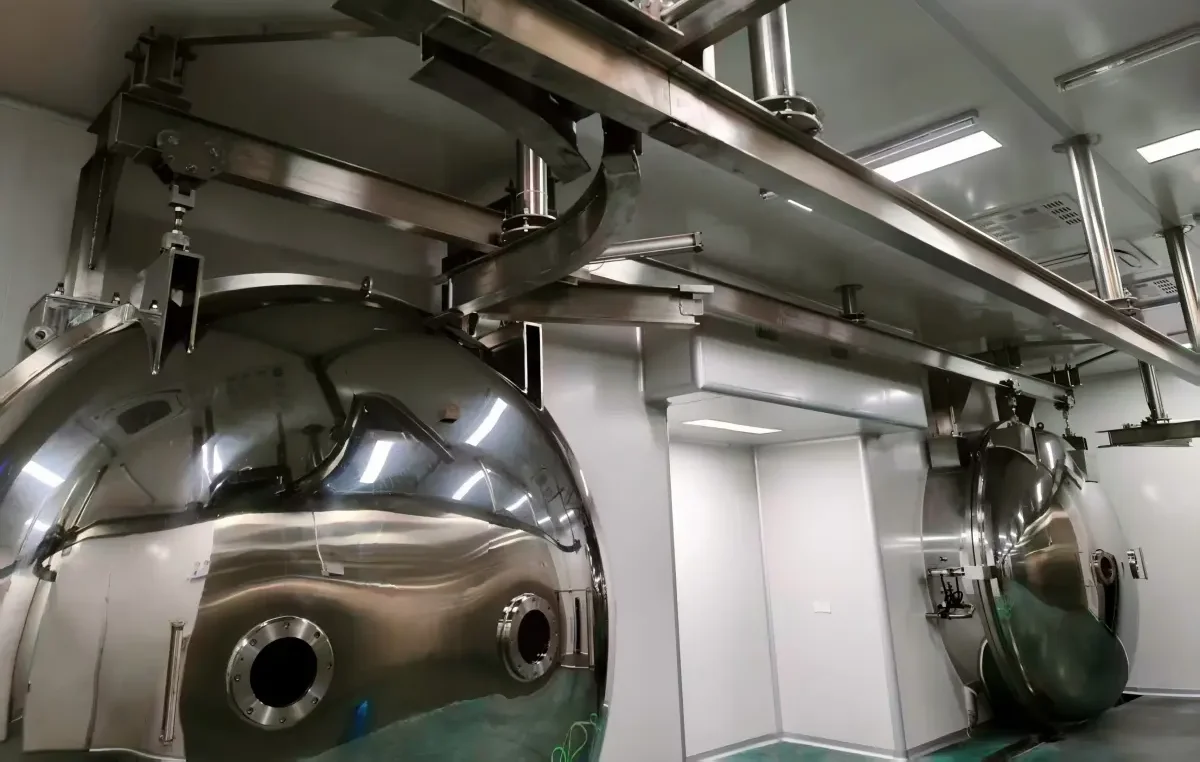
The same applies to freeze drying projects.
Someone may contact us asking for an industrial freeze dryer, but once we understand the raw material, moisture content, final product structure, daily output and loading pattern, the equipment configuration may change considerably.
This is one of the main reasons we value exhibitions and face-to-face meetings. We do not just talk about machines. We talk about how those machines will operate inside a real factory.
What Did We Learn From the August Meetings?
The biggest lesson was that customers increasingly want complete engineering solutions rather than standalone equipment.
| Customer Need | What We Discuss | Matton Approach |
|---|---|---|
| Thermal processing | Product, packaging, capacity and shelf life | Retort process design |
| Dairy beverages | Milk formulation and bottle format | Customized sterilization concept |
| Freeze drying | Product, batch size and moisture | Industrial freeze dryer selection |
| Factory investment | CAPEX, utilities and workflow | Complete equipment planning |
| Production expansion | Future capacity and automation | Scalable system design |
These conversations have directly influenced the projects we are working on now and the content we plan to share in the coming months.
What Did We Learn From Meeting Customers in Vietnam and Shanghai?
Exhibitions give us a very different perspective from online inquiries.
Online, customers usually ask direct questions such as “What is the price?” or “What is the capacity?”
At an exhibition, the conversation is often much deeper.
We can discuss why a customer needs a particular process, what products they plan to manufacture, what equipment they already own, and where they expect their production line to be in three to five years.
We also meet customers who are comparing several processing technologies.
For example, a food manufacturer may be deciding between different thermal processing systems. Another customer may be comparing a conventional drying process with vacuum freeze drying. A third may be expanding from pilot production to industrial-scale manufacturing.
These discussions remind us that machine selection should always start with the product and process.
Why Is Face-to-Face Engineering Discussion Important?
In our experience, the most important project information often comes from small details.
The packaging material can affect the sterilization process.
The viscosity of a beverage can affect heat transfer.
The target shelf life can change the required thermal process.
The final moisture level can determine the freeze-drying cycle.
Even the physical arrangement of a factory can influence which machine configuration makes the most sense.
At Matton, we therefore prefer to ask questions before recommending equipment.
We want to understand the production target first and select the technology second.
How Did We Design a Retort Machine for a Kazakhstan Dairy Project?
One of our most interesting August projects involved a customer in Kazakhstan producing milk-based beverages.
The client aims to extend the product’s shelf life to approximately 12 months. This presents a significant engineering challenge, as extending shelf life through heat treatment involves more than simply raising the temperature or increasing the holding time. Potential issues include changes in color, mouthfeel, and odor, as well as the possible formation of sediment.
We therefore considered the project from several perspectives:
- Product formulation
- Bottle or container characteristics
- Filling conditions
- Retort loading
- Heating method
- Product heat penetration
- Cooling process
- Target F₀ value
- Commercial sterility
- Final storage conditions
Our engineering team developed a retort sterilization concept around the customer’s product and packaging requirements.
What Was the Target?
The project was designed around a potential shelf life of up to 12 months.
We deliberately use the wording “designed to achieve” rather than “guaranteed,” because shelf life is determined by the complete validated process, not by the retort machine alone.
A commercial retort system must be evaluated together with the product recipe, package geometry, initial temperature, filling conditions, heat penetration and cooling process.
| Project Element | Kazakhstan Dairy Project |
|---|---|
| Product | Milk-based beverage |
| Market | Kazakhstan |
| Main objective | Extended shelf life |
| Target shelf life | Up to 12 months |
| Main equipment | Retort sterilization system |
| Engineering focus | Heat penetration and process control |
| Validation requirement | Thermal process and commercial sterility verification |
This is exactly where customized engineering becomes more important than simply choosing a standard machine model.
Why Can a Retort Machine Extend the Shelf Life of Milk Beverages?
The working principle of a retort involves subjecting filled and sealed packaged products to controlled heat treatment to achieve commercial sterility.
For suitable products and packaging, this process significantly reduces microorganisms that could cause spoilage or pose safety risks.
However, in the context of milk-based beverages, the objective goes beyond merely applying “high heat.”
The true goal is to ensure adequate heat treatment at the product’s coldest point within the package, while avoiding unnecessary thermal damage and preserving the milk’s natural color and flavor as much as possible.
For this reason, concepts such as heat penetration, F₀ value, and commercial sterility are of critical importance.
How Do We Choose the Right Equipment?
We usually ask:
- What is the product?
- What is the package?
- What is the package size?
- What is the production capacity?
- What shelf life is required?
- What heating medium is available?
- Does the package require overpressure?
- How will cooling be performed?
- What level of automation is required?
Depending on the process, different configurations may be suitable.
These can include steam-air retorts, water-spray systems, water immersion systems or other controlled thermal-processing configurations.
For food and beverage manufacturers, the important question is not simply, “Can this autoclave machine reach the required temperature?”
The better question is:
“Can this system consistently deliver the correct validated thermal process to my actual product and packaging?”
That is how we approach retort engineering at Matton.
How Does Industrial Freeze Drying Fit Into Matton’s Engineering Work?
While the Kazakhstan project focused on thermal sterilization, many of our August discussions also involved freeze drying.
An industrial freeze dryer is very different from a retort machine, but the engineering principle is similar: we begin with the product rather than the equipment.
Freeze drying, or lyophilization, involves freezing the product and then removing water under vacuum through sublimation.
This process is particularly useful when manufacturers want to preserve product structure, aroma, appearance or heat-sensitive characteristics.
We work with customers interested in industrial freeze drying for products such as fruit, vegetables, coffee, herbs, ingredients, specialty foods and other high-value products.
What Does an Industrial Freeze Dryer Need to Consider?
Selecting an industrial freeze dryer requires more than specifying batch capacity.
We also consider:
| Parameter | Why It Matters |
|---|---|
| Product type | Determines freezing and drying behavior |
| Initial moisture | Influences total water removal |
| Loading thickness | Affects drying resistance |
| Batch size | Determines chamber and shelf area |
| Final moisture | Defines drying endpoint |
| Product temperature | Influences quality and cycle time |
| Vacuum level | Affects sublimation |
| Condenser capacity | Determines vapor capture capability |
| Shelf temperature | Controls product heat input |
| Production target | Determines required number of batches |
This is why two customers requesting the same nominal capacity can still require different freeze-drying systems.
For large-scale food production, our goal is to create an industrial freeze dryer solution that fits the complete factory process rather than simply delivering a chamber with a specified shelf area.
What Does a Complete Matton Food Processing Solution Look Like?
Our customers increasingly ask us to look beyond a single machine.
A complete project may include several processing stages, auxiliary systems and integration requirements.
For a thermal-processing project, this could involve filling, capping, retort sterilization, cooling, labeling and packaging.
For a freeze-drying project, the process may include raw-material preparation, washing, cutting, pre-freezing, loading, vacuum freeze drying, unloading, milling, powder handling and packaging. Over the years, we have accumulated extensive experience helping entrepreneurs from more than 50 countries and regions establish their food processing plants. This is our greatest source of pride, as our enduring goal is to assist our clients.
Video from MATTON showing an on-site customer delivery, featuring two production lines: one for quick-frozen fruit and another for freeze-dried fruit slices.
Why Does Process Integration Matter?
Equipment performance depends heavily on what happens before and after the machine.
For example, a retort machine can be correctly designed but still perform poorly as part of a factory if the upstream filling system is unstable or the cooling utilities are inadequate.
Similarly, an industrial freeze dryer can have excellent technical specifications but fail to meet the required output if raw-material preparation, pre-freezing, loading and packaging are not properly matched.
We therefore look at:
- Production flow
- Material handling
- Utility consumption
- CIP requirements
- Factory layout
- Automation
- Operator workflow
- Maintenance access
- Future expansion
This allows us to move from “machine supply” toward a more complete turnkey solution.
What Are the Main Insights We Took Away From August?
After the exhibitions and customer meetings, I came away with several clear conclusions.
First, customers are becoming more technically informed. They want to understand not only what a machine does, but why a particular configuration is suitable for their product.
Second, equipment customization is increasingly important.
A standard model may be an excellent starting point, but the best final configuration depends on the customer’s actual production requirements.
Third, customers want evidence of engineering capability.
They want to know whether the supplier understands thermal processing, freeze drying, utilities, factory integration and commissioning—not simply whether the supplier can manufacture stainless-steel equipment.
What Does This Mean for Matton?
For us, it means spending more time on engineering communication.
We will continue sharing real projects, technical discussions and practical lessons from the field.
Our website may not be updated every few days when our team is traveling, attending exhibitions or working on customer projects.
But the engineering work continues.
The Kazakhstan dairy project is a good example.
The customer came to us with a shelf-life requirement. We did not start by selecting a machine from a brochure. We started by understanding the beverage, packaging and processing objective, and then developed the sterilization solution around those requirements.
That is the type of engineering process we want Matton to be known for.
What Can Customers Expect From Matton This September?
As we move toward September, we expect to continue working on new projects covering retort sterilization, freeze drying and wider food-processing applications.
We will also continue improving our technical content so that customers can better understand how different technologies work and how to select appropriate equipment.
Our goal is simple: make it easier for food manufacturers to turn a production idea into a workable industrial process.
Whether a customer is looking for a retort machine for milk, an industrial retort machine for food processing, an autoclave machine or an industrial freeze dryer, we believe the correct starting point is always the same:
Understand the product.
Understand the process.
Understand the factory.
Then design the equipment.
Could We Help With Your Next Project?
If you are planning a new food-processing plant, expanding an existing factory or investigating a new product, our engineering team can help you evaluate the process and equipment requirements.
For a useful initial discussion, we normally need several basic details:
| Information | Example |
|---|---|
| Product | Milk beverage, fruit, coffee, vegetable, etc. |
| Capacity | kg/batch, bottles/hour or tons/day |
| Packaging | Glass bottle, pouch, tray, bulk product |
| Target shelf life | Product-specific requirement |
| Process | Retort, freeze drying or combined process |
| Location | Country and factory conditions |
| Utilities | Steam, electricity, chilled water, compressed air |
| Project stage | Concept, quotation, installation or expansion |
At Matton, we are always interested in discussing new processing challenges—especially when there is no standard answer.
Contact Matton to discuss your retort machine, autoclave machine or industrial freeze dryer project and request a customized engineering proposal.
What Questions Do Customers Frequently Ask About Our Equipment?
1. Can the high-temperature sterilization machine be used for any type of beverage?
Yes, a suitable retort system can be used for any beverage; however, the correct process depends on the formulation, packaging, filling conditions, thermal properties, and desired taste profile. The sterilization cycle should be determined through proper heat penetration studies and process validation, rather than being selected based solely on the retort’s maximum operating temperature. MATTON provides not only the machinery but also design and installation services, considering your future market access right from the design stage.
2.Can a retort machine achieve a 12-month shelf life?
A retort process can be designed to support extended shelf life, including targets such as 12 months for suitable products. However, shelf life depends on more than the equipment. Product formulation, packaging integrity, heat penetration, commercial sterility, F₀ value, cooling and storage conditions all need to be considered and validated.
3. How can I obtain a feasibility report and calculate projected returns?
MATTON employs professional engineers and project designers; simply contact us, and we will calculate your return on investment and provide a feasibility analysis. We also offer product solutions tailored to the market.
4. What products can be processed in an industrial freeze dryer?
Industrial freeze dryers can be used for a wide variety of products, including fruits, vegetables, coffee, herbs, ingredients, specialty foods and other heat-sensitive materials. The appropriate system depends on batch size, moisture content, product geometry, desired final moisture and production capacity.
5. How does Matton select the right processing equipment?
We begin with the product and production target rather than recommending a machine model immediately. We evaluate the process, packaging, capacity, utilities, factory layout and future expansion requirements, then develop an equipment configuration around the project. This approach helps us provide a more practical solution than simply matching a customer with a standard machine.
Why Does Matton Focus on Engineering Rather Than Just Equipment?
The past month reminded us why engineering communication remains at the center of what we do.
A machine is only one component of a production system.
A retort machine needs a suitable thermal process.
An autoclave machine needs to be matched to its real application.
An industrial freeze dryer needs to be selected around the product and production target.
And a successful factory needs all of these elements to work together.
Our conversations in Vietnam and Shanghai, together with the Kazakhstan dairy project, reinforced this belief.
So while our website updates may have been less frequent during August, our work has certainly not slowed down.
We have been meeting customers, understanding real production challenges and designing new solutions.
That is what we will continue doing at Matton.
From retort sterilization to industrial freeze drying, we are here to help turn your processing requirements into a practical industrial solution. Contact Matton for a project consultation and customized equipment proposal.